crescendo26: GegenTöne - Counter-Tones
The radical nature of the original sound – crescendo
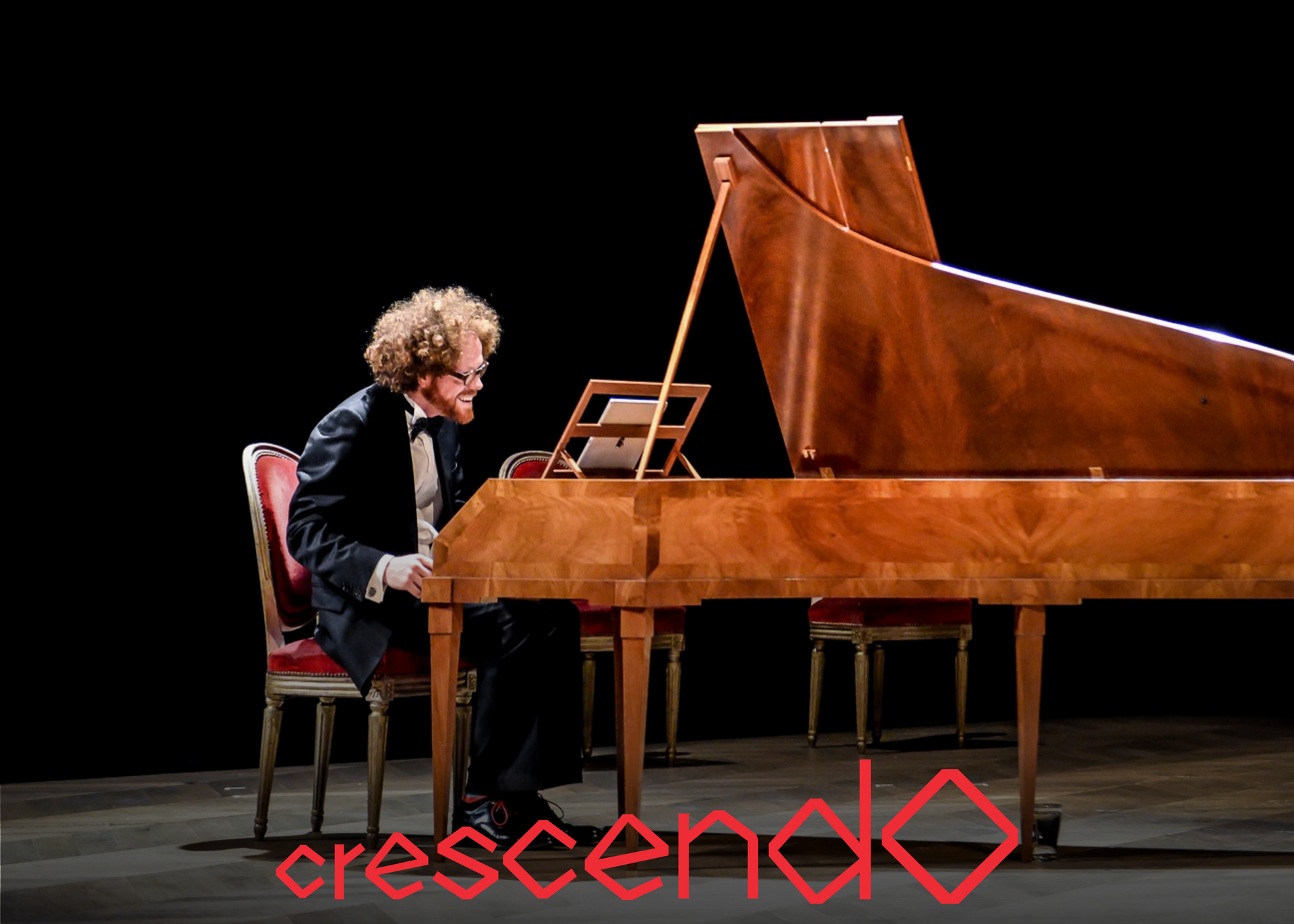
Bach, Mozart, Beethoven: we have heard them all on our modern grand pianos, on violins with steel strings, in acoustically perfect concert halls.
Of course, this does not correspond to the circumstances and playing techniques, nor to the ensembles for which the composers wrote at the time. The ‘radicalism of the original sound’, a term coined by Nikolaus Harnoncourt in the 1950s, addressed this fact, questioning cherished listening habits and established approaches to interpreting Baroque and Classical music, thereby revolutionising the music world. On this evening, these differences in sound will be directly contrasted: The same works will be performed on the fortepiano and grand piano, highlighting the incredible scope for interpretation offered by a historically informed performance: dynamic, metrical, colourful, with individual embellishments and variations on the musical text. Lucas Blondeel, professor of piano and fortepiano at our university, covers both areas expertly, both in terms of performance and history. Together with Lea Rahel Bader on historical violoncello and Yibai Chen on a modern cello, he brings the radical nature of the original sound closer to the audience.
Juliane Reichardt (née Benda): Sonata in G major for piano | Jean-Louis Duport: Nocturne No. 3 for violoncello and piano: 2. Agitato | Carl Philipp Emanuel Bach: Fantasy in F-sharp minor, Wq. 67 | Ludwig van Beethoven: Sonata for Piano and Violoncello in F major, Op. 5 No. 1
Lucas Blondeel, fortepiano and piano / Lea Rahel Bader, baroque cello / Yibai Chen, violoncello
Support us
The Berlin Senate has imposed enormous savings targets on public universities. You know that: An excellent musical education consists not only of the many hours of solitary practising and lessons by professors, but also, to a large extent, of performing in front of an audience. This inherent part of the training is also the opportunity for you to attend almost always free concerts at a high level. We don't want to have to cut back on this. By attending our events, you can also show those responsible in politics that music and art are meaningful for every society. And if you can: support us with small or large donations. The donations are used for teaching, tuning, transport, advertising material, for our music festival crescendo - wherever no funds can be spent at the moment. This directly benefits our students and also you as the audience, as this is the only way we can maintain events of this calibre and variety.
Thank you very much!
Info
crescendo – Künstlerisches Betriebsbüro der Fakultät Musik
crescendo@udk-berlin.de