Events
Here, we present various formats that not only provide significant impulses and strengthen the dialogue on antisemitism but also demonstrate how creative, interactive and scientific approaches can foster a deeper understanding of the complex societal challenges associated with addressing antisemitism, while supporting long-term prevention efforts.
Antisemitism as a Visual Code: On the Relationship Between Images, Art and Antisemitism
Dr. Mira Anneli Naß
Thursday, 22/10/2026 | 6.00 pm c.t.
Hardenbergstrasse 33 | Room 201 (Auditorium)
Antisemitism is linked to images in the broadest sense: to projections, patterns of thought, myths, worldviews or stylistic figures. To quote Shulamit Volkov, it is not only a cultural but also a visual code, capable of adapting to social norms, technological developments and artistic styles. Nevertheless, art history has paid relatively little attention to the connection between images and antisemitism – precisely the academic discipline that traditionally sees itself as responsible for the analysis of images. In Germany, too, despite – or perhaps precisely because of – the entanglement of art, art history and cultural policy in a long tradition of antisemitism, no independent research into the relationship between images and antisemitism has yet been established. In recent years, the art world has instead become a central arena for the articulation of antisemitism and debates surrounding it. Taking this circumstance as its starting point, the lecture aims to provide an introduction to and overview of the fundamental relationship between the image, art and antisemitism, whilst also exploring the question of the place of antisemitism research within art history.
About the speaker
Mira Anneli Naß studied art history, literature and theatre studies in Munich and Florence, as well as theory and history of photography at the Folkwang University of the Arts in Essen. In 2025, she completed her PhD with a study of operative images in the art field after 9/11. From 2019 to 2024, she was a research assisstant in the Department of Art History and Aesthetic Theory at the University of Bremen. This was followed by a post on the research project on antisemitism at documenta fifteen at Frankfurt UAS, and a stay as Minerva visiting fellow at the Hebrew University of Jerusalem. Since 2026, she has been working as a research assisstant (postdoc) on the research project Searching for a Common Cause. Antisemitismus in the Cultural Field at the Institute for the Fundamentals of Modern Architecture (IGmA) at the University of Stuttgart. Her research interests include photography and time-based media; aesthetics, history and theory of operative imagery; political iconography; debates in memory culture; and antisemitism (and its study) in art and art history. Mira Anneli Naß is a founding member and co-speaker of the working group Kunst und Antisemitismus (Art and Antisemitism) of the Ulmer Verein – Association for Art and Cultural Studies. She also works as an art critic (Camera Austria, taz, among others) and received the C/O Berlin Talent Award Theory in 2019.
The lecture series BREACH! ON ART AND ANTISEMITISM was conceived and organised by Henning Gutfleisch, Adviser to the President on Antisemitism at the Berlin University of the Arts (UdK Berlin) - with the kind support of the Foundation “Remembrance, Responsibility and Future” (EVZ)
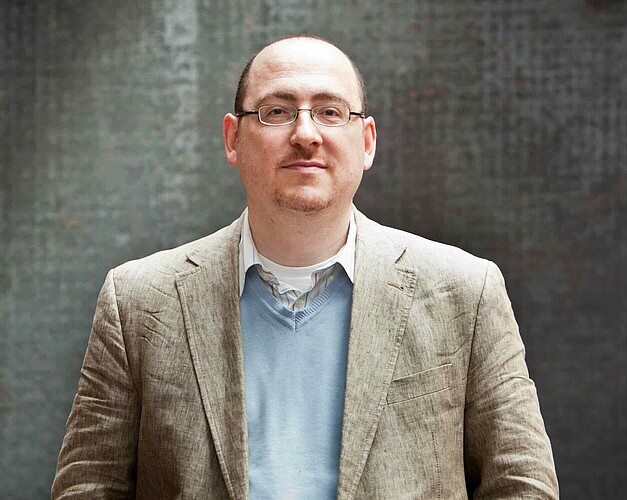
Taube Juden und Jüdinnen Sozio-historische Annäherungen an eine transnationale und hybride Gemeinschaft im 19. und 20. Jahrhundert von Zaurov, Mark
Buchvorstellung am 7.7.2026 I Charlotte-Salomon-Saal I 16 Uhr in der Hardenbergstrasse 33
Als 1896 der Verein für taube Juden in Berlin gegründet wurde, gab es schon die Israelitische Taubstummen-Anstalt in Berlin-Weißensee. 1908 kam ein Altersheim dazu. 1926 erschien die erste und einzige deutschsprachige Zeitschrift für taube Juden und Jüdinnen. All diese Räume boten den Nährboden für die vielfältige Taub-Jüdische Welt als imagined community. Diese Gemeinschaft war eine doppelte kulturelle Minderheit: taub und zugleich jüdisch - bis die Nationalsozialisten sie zerstörten. Erst 2001 fand der Verein für taube Juden in der IGJAD, der Interessengemeinschaft für taube Menschen mit jüdischer Abstammung in Deutschland, seine Nachfolgeorganisation. Diese Lücke zeugt von der Leerstelle in unserer Erinnerungskultur. Obwohl Inklusion heute gefördert wird, hat sich das sowohl in der hörend-jüdischen Welt, als auch in der nichtjüdischen Gehörlosengemeinschaft nicht geändert. Forschung dazu gibt es kaum. Wer waren die Personen, die die taub-jüdische Gemeinschaft aufbauten, wie verliefen ihre Biographien und wurde im Zuge der Restitution ihr materielles Erbe, die Gebäude, berücksichtigt? In dieser Lesung trägt der taube Historiker Mark Zaurov aus der ersten wissenschaftlichen Arbeit zu diesem Thema vor.
Vita: Mark Zaurov, geb. 1972 in der ehem. Sowjetunion, ist von Geburt taub und promovierte als Deaf Historiker im Fachbereich Gebärdensprachen an der Universität Hamburg u.a. mit einem Stipendium der Friedrich Ebert Stiftung. 2011 war er Fellow am United States Holocaust Memorial Museum (USHMM), 2016 erhielt er einen Fellowship der European Holocaust Research Infrastructure (EHRI) für Yad Vashem. Seine Forschungsschwerpunkte sind Deaf Studies, Deaf Holocaust und taube Täter*innen des Nationalsozialismus sowie Deaf Art und Translation im Kontext Tauber Juden und Jüdinnen, ausserdem ist er freiberuflicher Dolmetscher und Übersetzer. Er ist Gründer und Vorsitzender der Interessengemeinschaft Gehörloser Jüdischer Abstammung in Deutschland e. V.
2025 Lecture Series at UdK Berlin: Antisemitism at Universities – Reality, Reflection, Reaction
This lecture series provided a space for in-depth reflection and constructive exchange on antisemitism. Antisemitism is also a reality at universities—whether in academic debates, student initiatives, or everyday campus life. The series “Antisemitism at Universities – Reality, Reflection, Reaction” examined current scholarly perspectives on the topic and presented both analytical and practice-oriented approaches to combating antisemitic patterns of thought and behavior.
The series opened with a lecture on the empirical study of antisemitism: When is it Antisemitism? Academic Answers to a Frequently Asked Question (Prof. Dr. Dr. h.c. Monika Schwarz-Friesel, TU Berlin). This was followed by Antisemitism and Intersectionality: Critique and New Perspectives (Prof. Dr. Karin Stögner, University of Passau).
Practical strategies for documenting and combating antisemitism were the focus of the third event: The Research and Information Office on Antisemitism (RIAS Berlin) and Mobile Counseling Against Right-Wing Extremism (MBR Berlin) presented civil society approaches addressing the documentation of antisemitic incidents, support for those affected, and dealing with antisemitism in universities and cultural institutions.
Workshop: Antisemitic Incidents in Berlin with a Focus on Universities by Julia Kopp (RIAS Berlin) and Matthias Müller (MBR Berlin).
The series concluded with an analysis of the impact of October 7, 2023, on Jewish and Israeli communities in Germany. The lecture Antisemitism in the Institutional University Context – Traditions, Blind Spots, and Current Research examined how antisemitism has changed in everyday university life before and after this date and the challenges that have emerged as a result (Prof. Dr. Friederike Lorenz-Sinai, University of Applied Sciences Potsdam).
The lecture series was organized by Dr. Michaela Conen, Process Coordinator for Antisemitism Prevention at the Berlin University of the Arts (UdK), with support from the MFFB. Below you will find the recorded online lectures.
Lecture from May 12, 2025: When Is It Antisemitism? Scholarly Answers to a Frequently Asked Question
For years, claims such as "there is not enough research yet" or "we lack a precise scientific definition of antisemitism" have shaped the discourse and debates surrounding contemporary antisemitism. In this way, the extensive existing research on the topic is overlooked, and the much-needed enlightenment, as well as the societal fight against the growing hatred of Jews, is deferred to an indefinite future. In this lecture, using data-rich and scientifically validated findings from both historical and contemporary empirical research, the question of what antisemitism is (and what it is not), how it manifests, and how to recognize and deconstruct antisemitic attitudes will be discussed.
Link to the online presentation
Prof. Dr. Dr. h.c. Monika Schwarz-Friesel
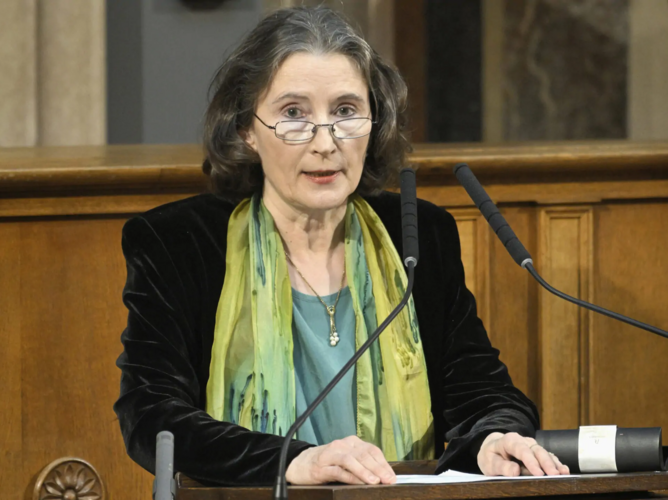
Prof. Dr. Dr. h.c. Monika Schwarz-Friesel, expert on antisemitism and cognitive scientist at the Technical University of Berlin; Chair at the Institute for Language and Communication. Her book publications include: Contemporary Antisemitism, a Phenomenon of the Center, Educated Antisemitism, The Language of Antisemitism in the 21st Century, Antisemitism on the Internet, Toxic Language and Mental Violence: How Antisemitic Thought and Emotional Patterns Have Shaped Our Communication for Centuries.
Lecture from May 19, 2025: Antisemitism and Intersectionality. Critique and New Perspectives
After October 7, it became clear that antisemitism is a significant gap within much of intersectional feminism. This reached a point where Jewish people and Israelis were denied intersectional solidarity. In a new approach to intersectional ideological critique, the lecture will analyze the interconnections between antisemitism, racism, and sexism.
Link to the online presentation.
Prof. Dr. Karin Stögner
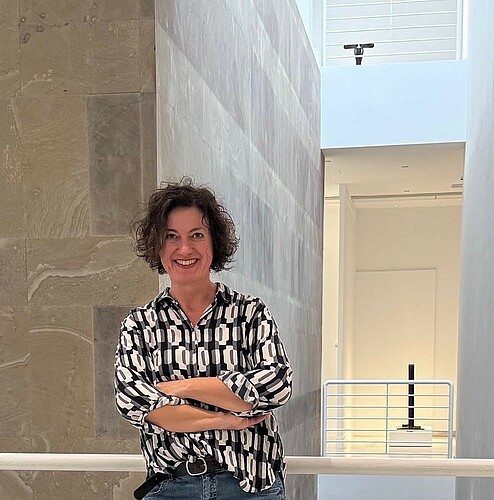
Prof. Dr. Karin Stögner is a Professor of Sociology at the University of Passau. She is the author of Antisemitism and Sexism: Historical-Social Constellations (Nomos 2014) and co-editor of Critical Theory and Feminism (Suhrkamp 2022).
Lecture from June 4, 2025: Antisemitism in the Institutional Context of Universities – Traditions, Gaps, and the State of Research
In this lecture, the question will be explored of how antisemitism manifests in the institutional everyday life of universities both before and after October 7, and how it impacts Jewish and Israeli communities in Germany. The lecture will address societal traditions in dealing with Jews and antisemitism in contemporary society, introducing the analytical category of institutional antisemitism. It will then present and discuss findings from current studies on experiences of antisemitism in the university context.
Link to the online presentation.
Prof. Dr. Friederike Lorenz-Sinai
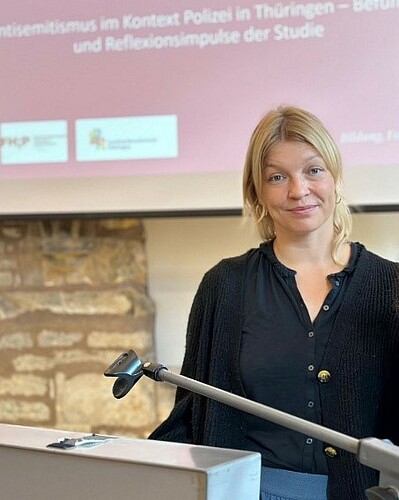
Prof. Dr. Friederike Lorenz-Sinai is a Professor of Social Work Methods and Social Work Research at the University of Applied Sciences Potsdam. Her research focuses on the processing of (sexualized) violence, everyday experiences in the prison system and perceptions of prison architecture, institutional antisemitism, as well as the impact of October 7, 2023, on Jewish and Israeli communities in Germany. Together with Marina Chernivsky, she co-leads a research area at the Competence Center for Antisemitism-Critical Education and Research. Current publications, each co-authored with Marina Chernivsky, include: Institutional Antisemitism as an Analytical Category – Traditions, Findings, and Research Gaps (2025); Analysekategorie institutioneller Antisemitismus“How come you don’t say anything when Jewish women are raped?” – Sexualized Violence in the Context of October 7 from Jewish Perspectives in Germany (2025), in: Glöckner, Olaf/Jikeli, Günther (eds.): Antisemitism in Germany After October 7. Georg Olms Verlag: Hildesheim; October 7 as a Turning Point for Jewish Communities in Germany (2024), Der 7. Oktober als Zäsur für jüdische Communities in Deutschland in: APuZ - Aus Politik und Zeitgeschichte: Antisemitismus, 74th year, 25-26 2024, pp. 19-24.
The events listed here represent just a selection of the activities undertaken by Dr Michaela Conen in her role as Process Officer for Antisemitism Prevention since June 2024.

Thought versus Thought: On Attacks on the ›Jewish‹ Mind and ›Zionist‹ Metaphysics
Dr. Gottfried Schnödl
Thursday, 12/11/2026 | 6.00 pm c.t.
JIB | Saal | Einsteinufer 43-45, 10587 Berlin
Antisemitism always implies a turn against thought. As early as 1879, Wilhelm Marr had declared war on the supposedly ›subversive‹ ›Jewish spirit‹. The narrow association of ›Jewish thought‹ with pragmatism and a sense of reality, but also with division, separation and abstraction, persists to this day. More recent antizionism takes up this theme once again.
This lecture seeks first to trace the historical development of this motif and – drawing on critical theory and psychoanalysis – to describe it as a turn against reflective thought itself. In doing so, it puts forward the thesis that attacks on ›Jewish‹ or ›Zionist‹ thought can be read as legitimisations of precisely those forms of decay in thought that constitute antisemitism and antizionism in the first place; as it were, as a safeguard for ›pathic projection‹ (Adorno/Horkheimer).
About the speaker
Gottfried Schnödl, PhD, studied German Studies, History and Philosophy in Vienna and Seville. He has worked in the Department of German Studies at the West University of Timisoara, at the Institute of Philosophy at the University of Vienna, and at the Institute for Culture and Aesthetics of Digital Media (ICAM) at Leuphana University Lüneburg. Since 2024, he is a research assistant at the Chair of History, Theory and Aesthetics of Material Cultures at the Bauhaus University Weimar.
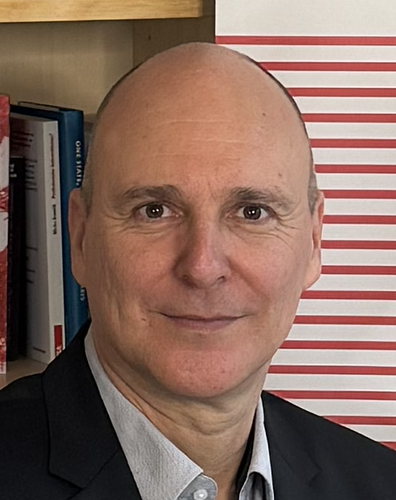
From Antijudaism to the Hatred of Israel: Projective Antizionism in History and the Present Day
Prof. Dr. Stephan Grigat
Donnerstag, den 19.11.2026 | 18.00 Uhr c.t.
Hardenbergstraße 33, 10623 | R110
To what extent is modern antisemitism rooted in a religious hostility towards Jews, and what role do religious antijudaism and conspiracy-myth antisemitism play in the hatred of the Jewish state? This lecture will outline the core principles of a critical theory of antisemitism and explore how forms of projective antizionism emerged long before the founding of the State of Israel – particularly within Nazi and Islamist ideologies of the 1920s and 1930s, as well as parts of the radical left. Against this background, links will be established both to Israel's current confrontation with the regime in Iran and to the contemporary situation in Germany.
About the speaker
Stephan Grigat is Professor of Theories and Critique of Antisemitism at the Catholic University of Applied Sciences North Rhine-Westphalia and Director of the Centre for the Study of Antisemitism and Racism [CARS] in Aachen and Cologne. He is the author of From Antijudaism to Hatred of Israel: Interventions on the Critique of Antisemitism (Budrich 2025) and editor of the volumes: Critique of Antisemitism in the Present Day (Nomos 2023) and – together with Karin Stögner – Projective Antizionism: Antisemitism against Israel before and after 7 October (Nomos 2025).