Inclusions and exclusions in design
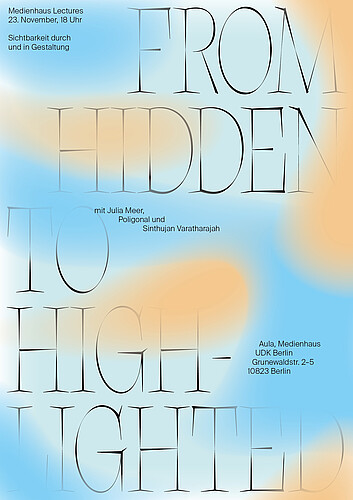
Medienhaus-Lectures zum Thema „Sichtbarkeit durch und in Gestaltung“ in Zusammenarbeit mit KM Robin Coenen
source: From Hidden to Highlighted.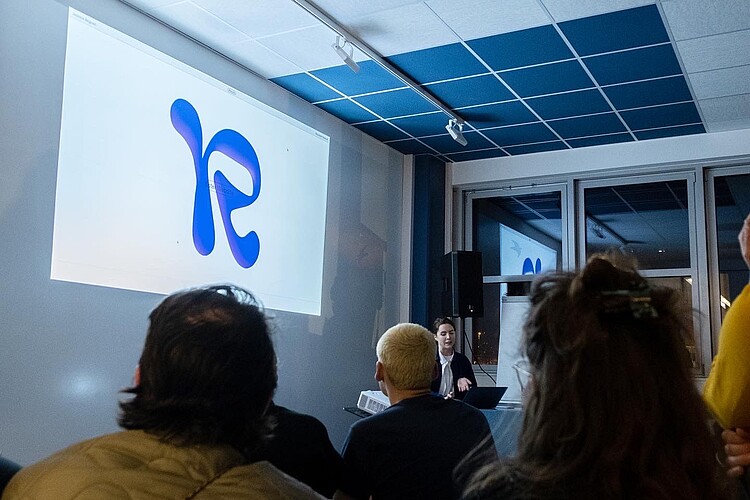
Vortrag an der TH Nürnberg zum Thema Sichtbarkeit und Repräsentation von migrantischen Gestalter*innen in Deutschland
source: Represent Network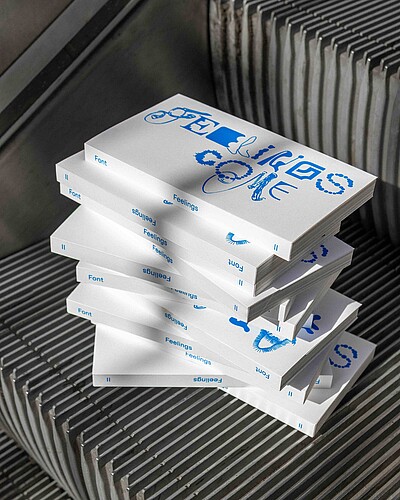
Publikation aus dem Seminar „Font Feelings“, in welchem typografische Formen spielerisch und experimentell erarbeitet wurden
source: Font Feelings Kurs
Medienhaus-Lectures zum Thema „Sichtbarkeit durch und in Gestaltung“ in Zusammenarbeit mit KM Robin Coenen
source: Justin Scharer
Studierendenarbeit von Lina Gröndahl aus dem Seminar „Blind Spots“ zu Braille Schrift
source: Lina GroendahlInclusions and exclusions in design
Design is never neutral and often requires a certain prior knowledge: a shared cultural memory, visual reading habits or a specific general education that is not universally shared. Design is never neutral and often requires a certain prior knowledge: a shared cultural memory, visual reading habits or a specific general education that is not universally shared. This is where the research project picks up. It focuses on questions about who we are addressing with our design and who we are, often unconsciously, excluding in the process. As designers, we actively shape the environment in which we live and bear responsibility for the images and content we communicate. This makes it all the more important for different perspectives to be represented in design, in order to prevent the reproduction of stereotypes or only ever considering and addressing one part of society.
Building on these questions, the research project examines how inclusion and accessible design can be better integrated into teaching and practice. Methodologically, it combines a playful, experimental approach with a critical examination of established norms, rules and the existing design canon, with the aim of highlighting the fact that design is always an expression of specific perspectives and decisions.
This exploration leads to materials and design approaches that hold the potential for a more accessible design practice. The outcomes are compiled in a publication.