Beats Meet
BeatsMeet: Interactive Gloves for Sonic Touch - Turning Handshakes into Sound
A handshake is more than a greeting—it’s a universal symbol of trust and connection. Across cultures, it serves as the first moment of physical contact between individuals, symbolizing acknowledgment and communication. Inspired by this social ritual, BeatsMeet transforms handshakes into an interactive sound experience, blending unique audio identities in real time.
How It Works
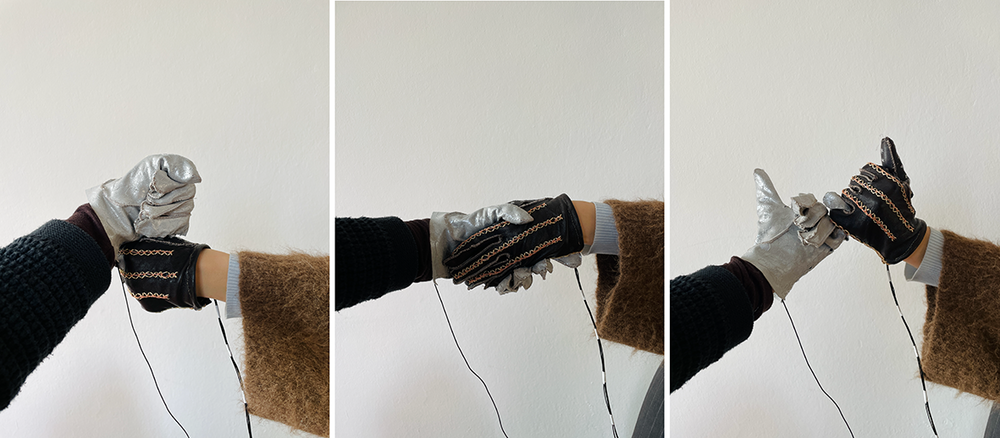
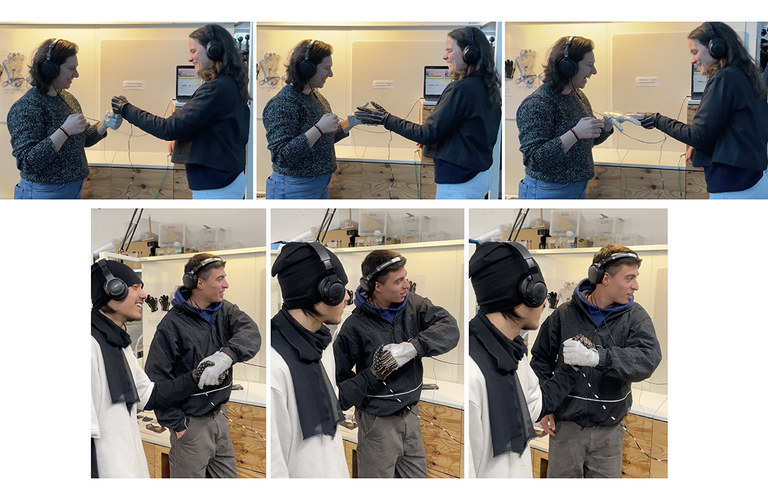
Each person wearing a glove carries their own unique sound. When two people shake hands, their sounds blend in real-time, creating a collaborative audio experience. The intensity, duration, and movement of the handshake shape the resulting sound, capturing the nuances of social interaction. Different gestures—such as a fist bump, high five, or pinky promise—produce distinct sound effects, allowing users to personalize their connections through touch.
Core Factors:
- Personal Sound: Users carry or record their own sonic identity.
- Headphones Interaction: Each participant hears an evolving mix in real time.
- Sound Fusion: Contact blends individual sounds, with distinct touchpoints triggering varied effects.
- Unpredictable Compositions: Some sounds harmonize, while others create unexpected textures, encouraging exploration.
Design and Development
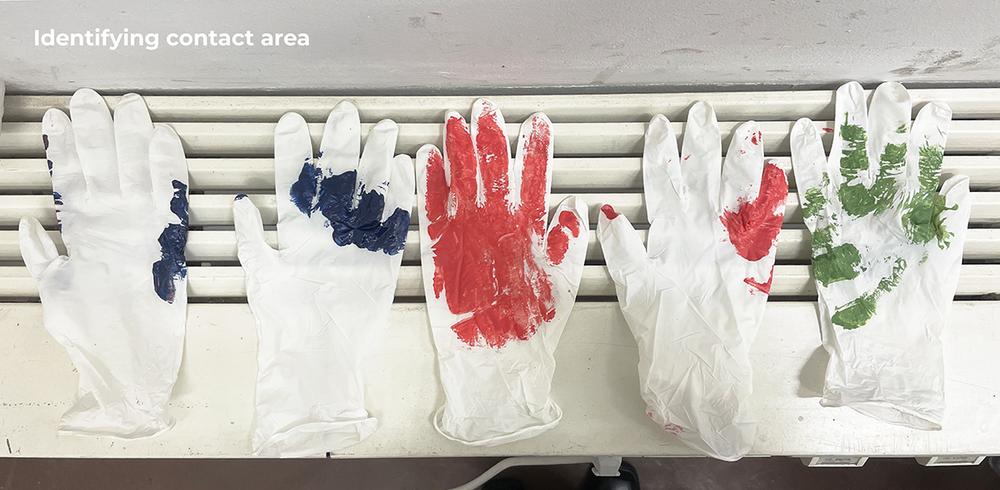
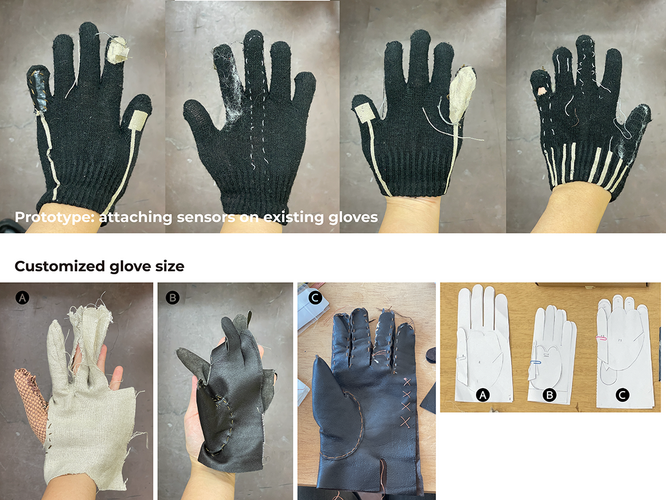
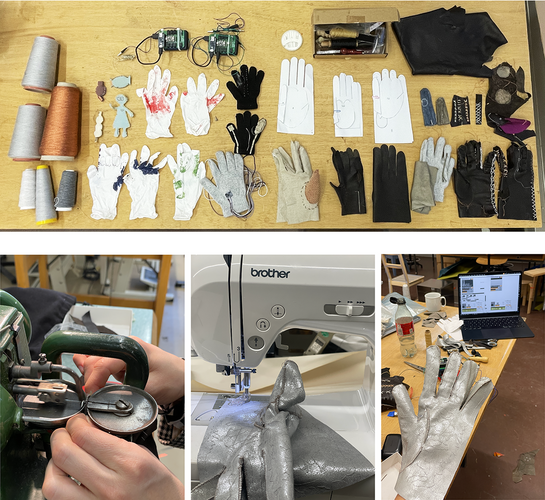
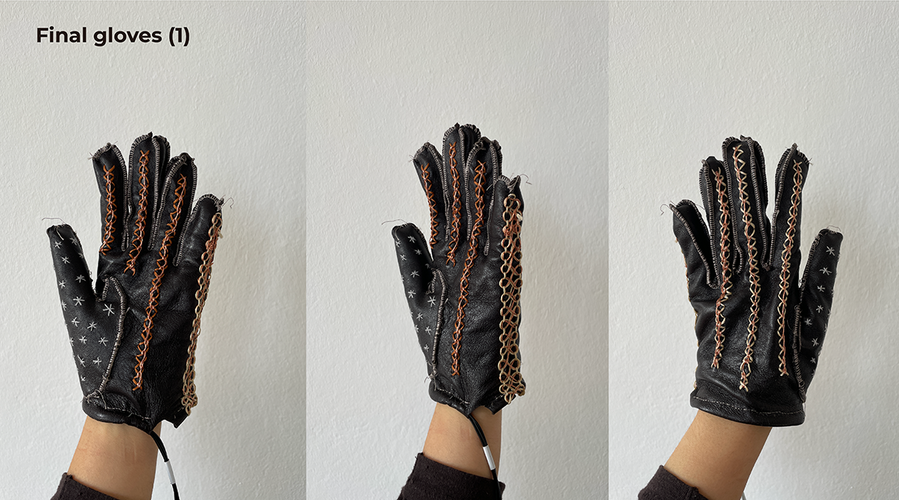
Our first step was mapping real-life hand gestures using spray paint to identify key contact areas for sensor placement. Next, we tested different glove sizes and materials to determine the optimal base. We then explored ways to make these areas responsive, experimenting with various materials such as stretchable threads, wool, pressure sensors, and accelerometers.
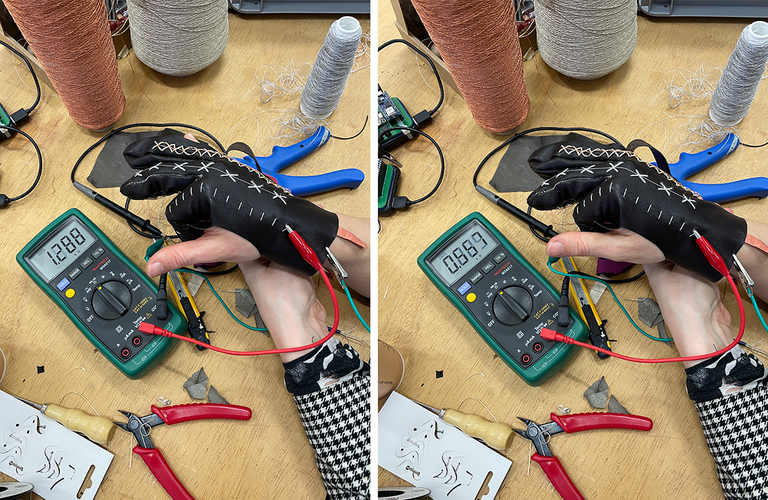
To ensure sensor accuracy and flexibility, we tested different stitching techniques and sensor placements, aiming to find the most effective combination of material, method, and positioning. Our goal was to strike the perfect balance between functionality, durability, and wearability.
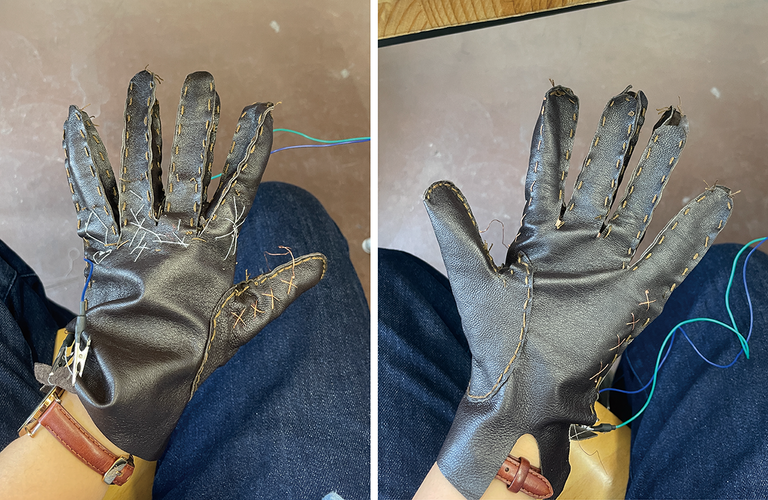
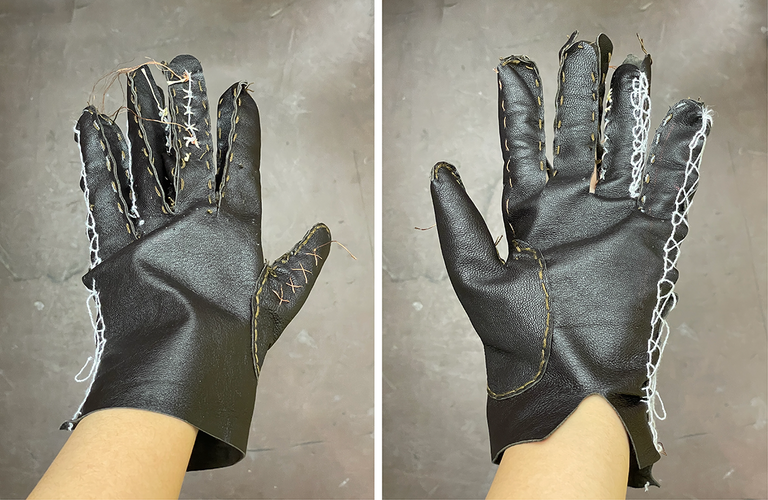
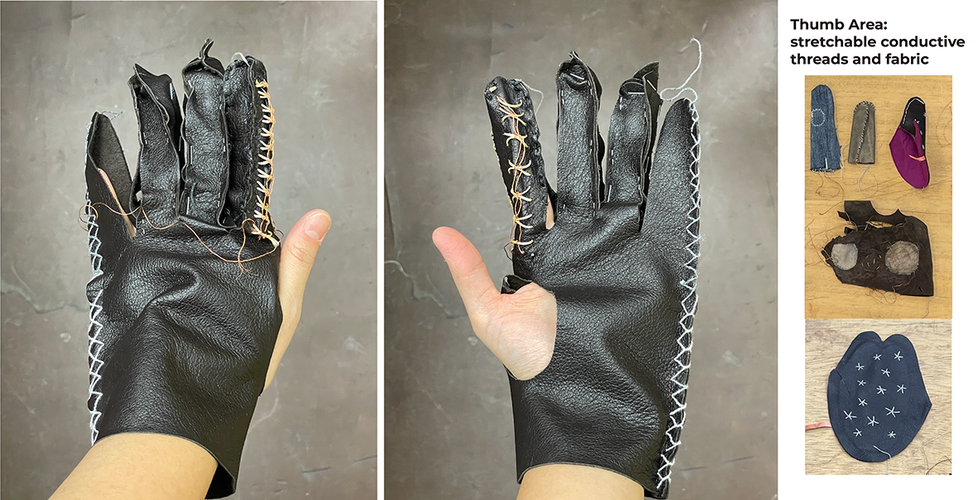
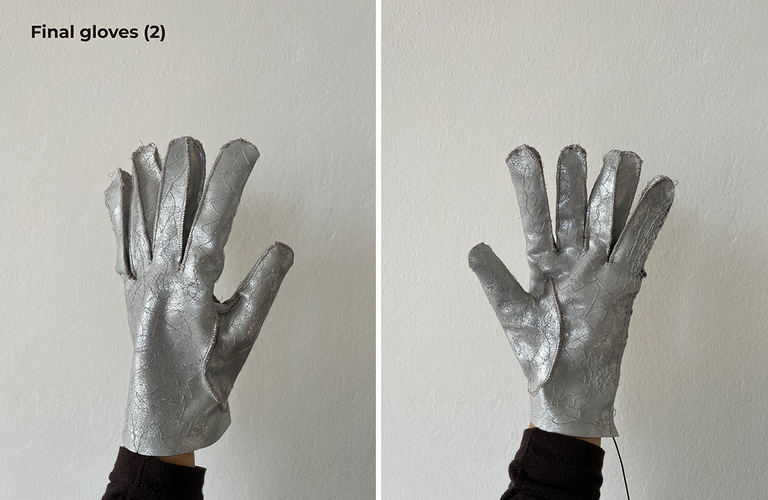
After iterating through multiple approaches, we successfully developed two custom-sized leather gloves—one larger and one smaller—to accommodate different hand sizes. We chose leather as the primary material because it offers both flexibility and stability while allowing easy attachment of components.
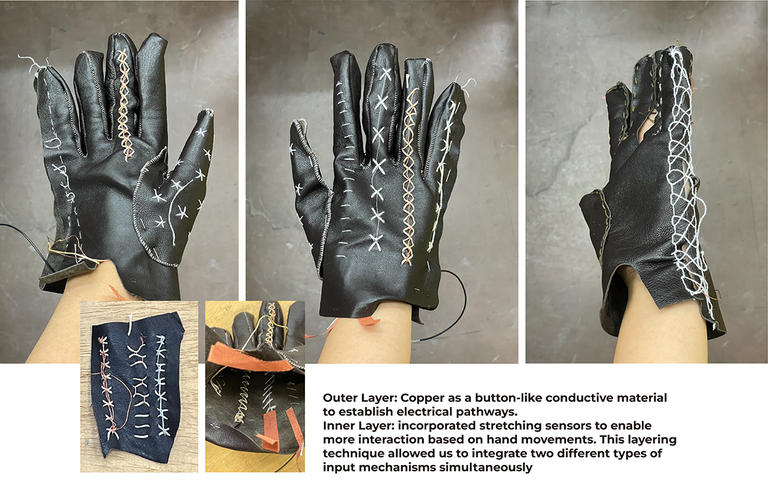
For the electrical and sensor elements, we refined our stitching patterns, integrating conductive copper threads on the outer layer for contact-based input and stretch yarn inside to capture motion. This layered approach enabled dual-input functionality: recognizing touch with another glove while also detecting hand movements and gestures.
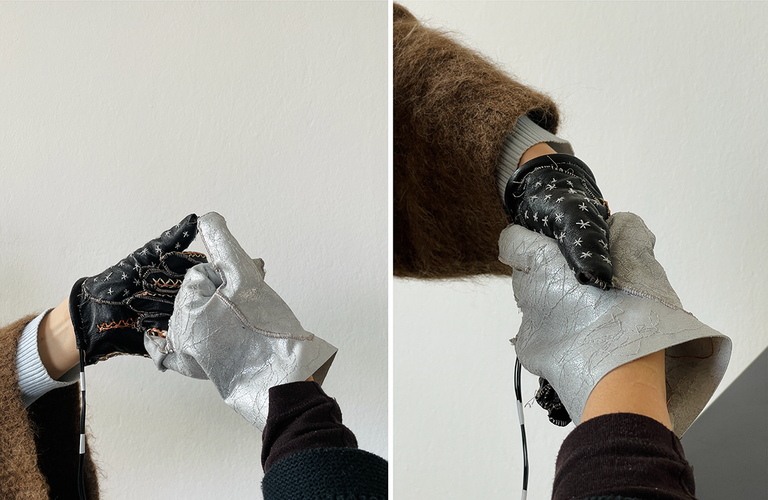
One glove functionality was only to be outputting electricity, and while the other acted as input and had the following alleinstehende responsive zones :
- Thumb – Pressure sensor made of piezoresistive fabric.
- Backhand – Combines pressure and stretch sensors, with piezoresistive thread inside and copper outside.
- Palm – Similar to the backhand, integrating piezoresistive thread inside and copper outside for pressure/stretch detection.
- Pinky – Functions as a button using external copper yarn.
To ensure accurate signal transmission, connections are isolated inside to prevent cross-interference.
Work in Progress