studio raumproduktion WiSe26/27 - Uncharted Bodies: Feeling Friedrichstraße

What happens when different disciplines explore the same place together? This is the question behind Uncharted Bodies, a semester-long design studio. For the first time, four partners work together for a whole semester: our Studio Space Production; the UdK Social and Economic Communication (GWK) with Prof. Dr. Maren Hartmann; and the Spatial Strategies master's programme at weißensee academy of art berlin / weißensee kunsthoschule berlin with Tonderai Koschke. Our long-time colleague choreographer and urban practitioner Sabine Zahn, weaves our practices together.
Funded by INTER, the UdK Berlin programme for interdisciplinary master's teaching, the studio „Uncharted Bodies“ opens our third series on experimental research and collaborative design, after "Designing Transformation" and "Porous Architecture".
A Street We Think We Know
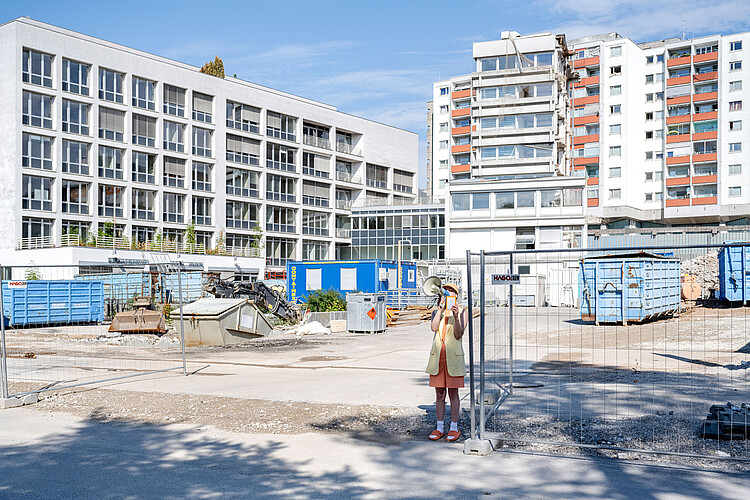
Our site is the entire length of Friedrichstraße. Between Mehringplatz and Friedrichstadtpalast lie very different realities: a neighbourhood under pressure around Mehringplatz; a former showpiece boulevard, once meant to become Berlin's Champs-Élysées, now marked by vacancy such as the former Galeries Lafayette (now being turned into office spaces), where capitalism has visibly failed; bars, restaurants and touristic nightlife; and countless shades of grey in between.
Yet there are still places of gathering, appropriation and self-organisation; some host our weekly meetings. Many more are hidden or made invisible. We want to make them visible, without either idealising or dismissing them.
With Berlin's politics in flux and no clear plan for the street, we ask: Who are cities made for? What could a different narrative for this place be? To learn from often overlooked knowledge, for example of homeless people, people with a migration background or disabled people, we need a research format that allows for non-verbal communication and physical presence.
No Problem to Solve
This studio does not start with a problem to solve. We look behind the façades and question familiar narratives, which takes time on site. Friedrichstraße is not a smooth surface.
In the first phase, we work in the street rather than at a desk, guided by privatisation, vacancy, bodily perception and the appropriation of space. In the second, each group develops its own question. In the third, it becomes an intervention or other engagement with the place, in an open format that may differ between groups. There is no predefined output. What emerges might be understood as a proposal in a broader sense: a way of reading, understanding and relating to a place differently. Imagining otherwise can be the beginning of transformation.
As part of the INTER network of projects, feedback on the process is essential. Students are asked to actively shape the studio and to reflect on what it means to work across disciplines, and why this matters for future practitioners.
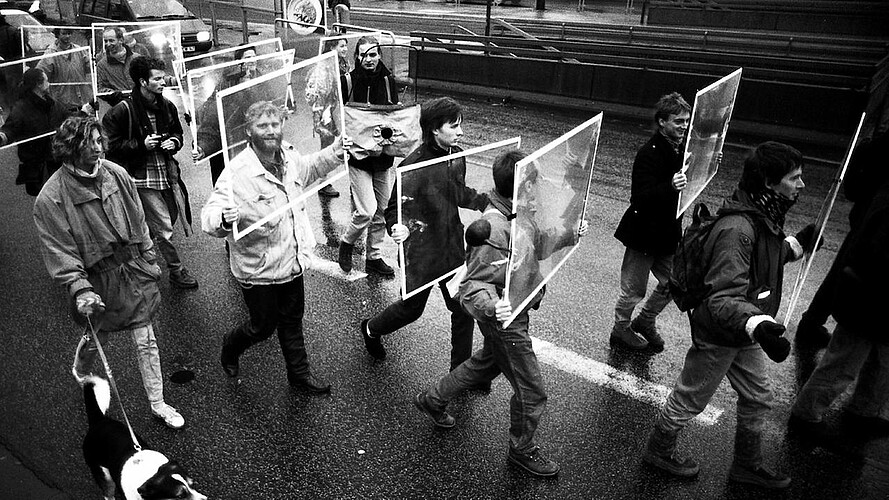
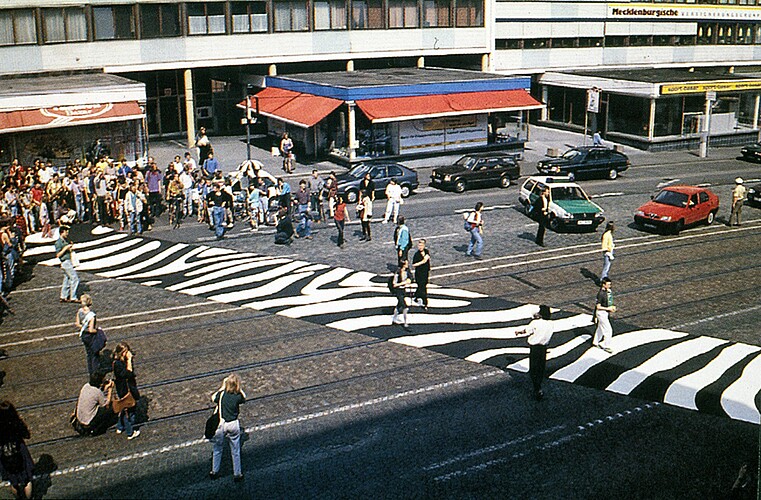

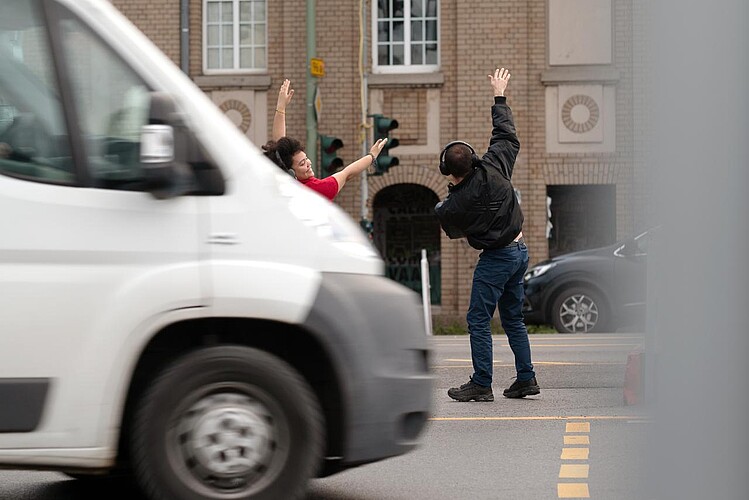
How We Work
This semester is an experiment that students and the teaching team develop together, on equal footing. We are looking for students who enjoy co-creating, taking initiative and working without fixed hierarchies, as well as those who would like to step out of their comfort zone with the support of a research community that acts as a collective body.
Interdisciplinarity is not a one-way transfer. Each programme brings its own methods and ways of seeing, from text analysis, rapid visualisation and spatialising ideas to flânerie, physical exploration and process-oriented art. These practices should transform one another and lead to questions no single discipline could ask alone. Mixed groups also mean getting to know each other first, an important part of the project and of an architect's work.


Flânerie, the Body and Urban Space as a Collaborative Research Practice
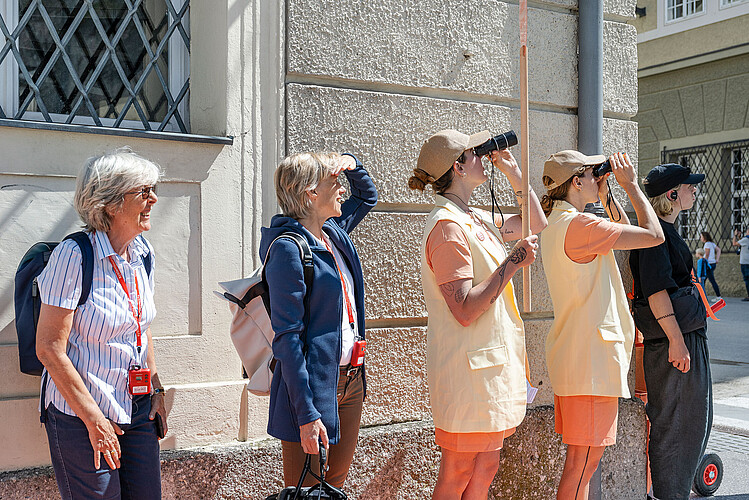
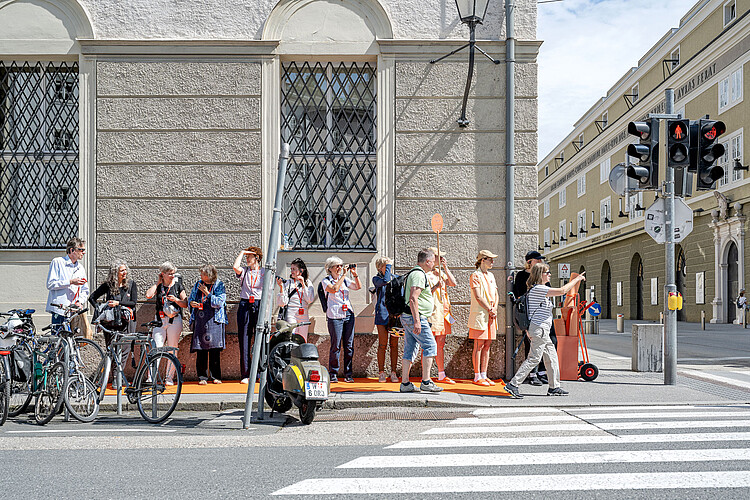
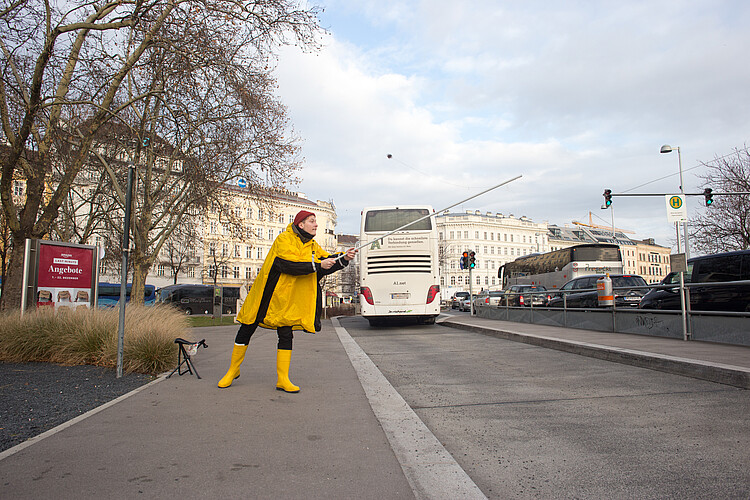
We go out. Out of the classroom. The first act of strolling through the city - or „flânerie“, a widely discussed cultural concept - is also a lived physical reality: Whose bodies move naturally through the city? Who becomes visible, who is made invisible, and why?
The body is both subject and main tool of our research. Sabine Zahn's somatic practice, developed over more than ten years, links our methods. It distinguishes context as situation, a web of entangled movements we are part of, from context as image, where representation fixes movement into pictures and places us outside what we observe. What does it mean to research, draw and propose from within the situation, and what role does the lived body, the Leib, play?
Practical Information
Studio day and time: Tuesdays, except the introduction on Wednesday, 14th of October (due to Master Final Presentations).
9:00 am - 1:00 pm: joint work with Sabine Zahn, GWK, Spatial Strategies.
2:00 pm - 4:30 pm: studio time at UdK, Room 401 (unless otherwise noted).
Locations: outdoors, based at partner venues along Friedrichstraße such as feldfünf, Kiezraum at Dragoner Areal, HAU Houseclub, Dreispitzpassage.
Groups: 15 students per programme, 45 in total, in mixed groups of three, ideally one per programme.
Formats:
Rotational hosting: sessions at all three universities: GWK (Mierendorffstraße), Architecture (Hardenbergstraße 33) and Spatial Strategies (Weißensee).
City tours: two organised tours, with Berlin Postkolonial and querstadtein.
Open Studios: Wednesdays after midterms and finals, all architecture studios show their work in a mini-Rundgang.
Discursive Dinners: informal talks with guests in Room 401, co-hosted with the design studio Do What You Want.
Phases:
Action (14 Oct–17 Nov): Building collectives and finding the questions.
Reflection (17 Nov–12 Jan): Deepening relations, condensing towards one question.
Action (12 Jan–9 Feb): Situated practice, translation into proposal.
Documentation and Knowledge Transfer
How do disciplines document and pass on knowledge? Perceiving a place together reveals what conventional site analysis barely captures: use, atmosphere, accessibility, social relationships and temporary appropriations of public space.
You will document your work throughout the semester. For documentation and consolidating the process in the second half, we welcome Berlin-based artist Marina Resende Santos, who works between intervention, research and social practice. Not everything should become an image, so we explore other forms, from an anarchive to non-visual records.
Thanks to Ana Filipovic and her students for sharing last semester's research on the site!


Why It Matters
After university, architects rarely work alone: they face other disciplines, realities and ways of thinking. This studio is a place to practice that.
We are losing touch with the physical world and the ability to talk to each other, which is core to democracy: living with contradictions, sitting with uncertainty and seeing the unknown as a source of power.
Walking alone rarely changes anything, but walking together can. As Rebecca Solnit writes in Wanderlust: A History of Walking (2000): "…it is hard to imagine a viable civil society without free association and the knowledge of the terrain that comes with walking. A sequestered or passive population is not quite a citizenry."
And we plan to have fun along the way!