studio raumproduktion SoSe26: "designing transformation: from fake estates to micro-futures"
In the “designing transformation” project series, we are developing future scenarios for small, fragmented plots of land owned by the State of Berlin. The revitalisation of underused spaces, further development and conversion, and a climate-neutral city are key themes of the IBA – International Building Exhibition 34/37, which is currently in the conceptual phase. For this design project, we are collaborating with the Senate Department for Urban Development, Construction and Housing.
Berlin still owns 47% of the federal state’s territory. This property is categorised by type of use. As much as 7% of the state’s assets consist of fragmented and re-consolidated plots – spaces that defy classification by use. Does that mean they are useless spaces?
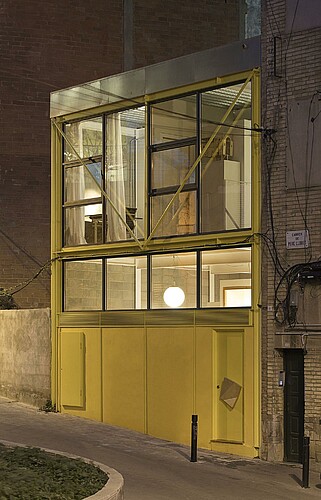
The demand for space in Berlin is enormous, and competition for space is correspondingly fierce. Could these fragmented and residual plots not, after all, offer more than previously assumed? For the climate, housing, diversity, public services and culture?
It is thanks to extremely creative and persistent conceptual and negotiation work that there is now a new, additional category: the urban option area. These are state-owned areas that have not yet been entirely abandoned; here, something might yet be possible, beyond traditional uses and far beyond typical development mechanisms.
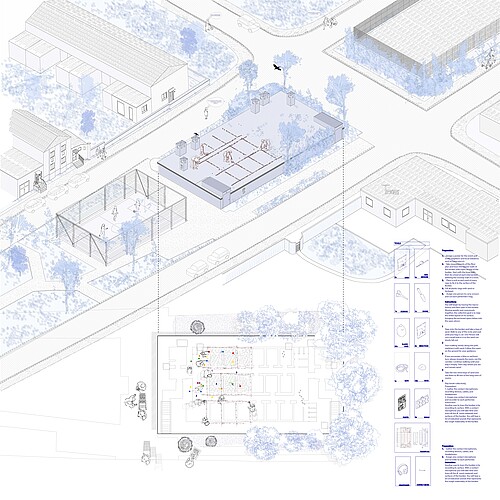
With this design project, we are focusing on urban option areas. The project title ‘micro-futures’ refers to ‘micro forests’, a strategy of spatially compact yet highly impactful interventions in the urban fabric.
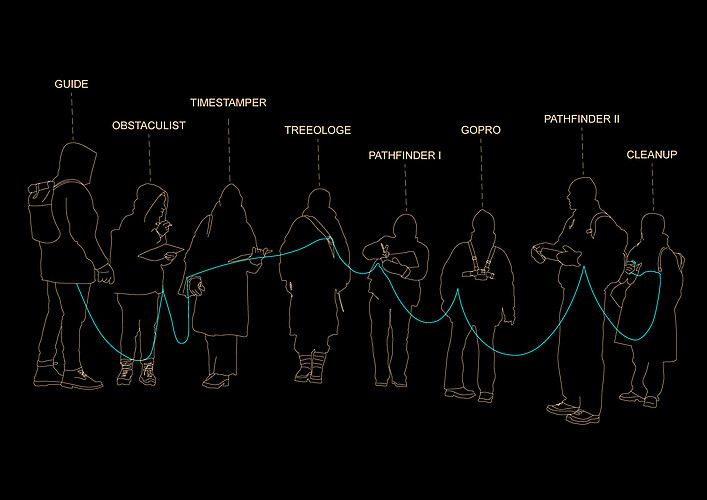
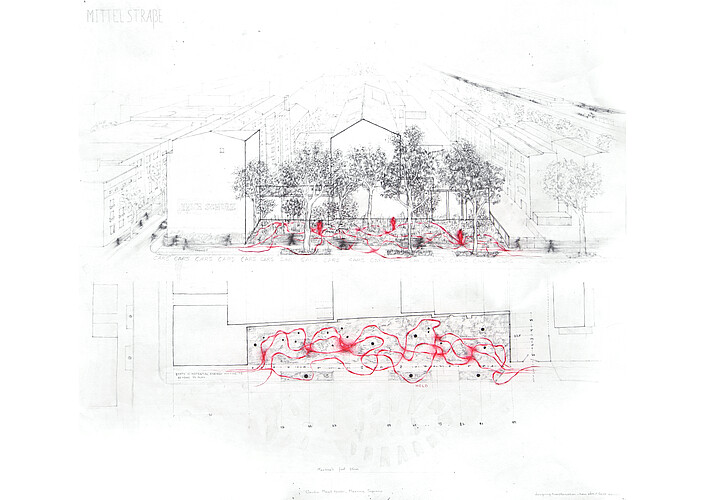
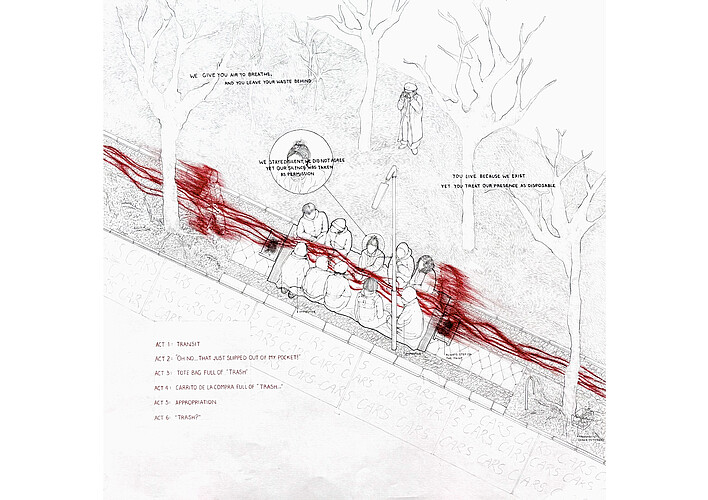
We are developing new ideas for neglected sites; we are exploring the terrain and addressing the contradictions that have prevented any (long-term) action from taking place so far; we are confronting these abandoned places with a zest for life and entirely new narratives.
During the summer semester, we are working on scenario designs for three selected urban option sites.
They are located in Steglitz, in the shadow of the Steglitzer Kreisel, along the city motorway just round the corner from Bundesplatz, and in the Fliegersiedlung, near Tempelhofer Feld. We will build on the extensive groundwork laid during the winter semester and draw upon the explorations, analyses and fictional transformations.
We are seeking compelling designs that demonstrate architecture’s capacity for action, particularly in the face of unusual starting points. We are looking for designs that convincingly address today’s challenges: utilising spatial resources, designing for climate adaptation, and promoting diversity and spatial justice.
Scenario design method: We will develop the designs across three scales (small, medium, large) and three timeframes (one season, 5 years, permanent). In the first half of the semester, a brief design will be developed for each scenario. In the second half of the semester, a selected scenario design will then be elaborated in depth.
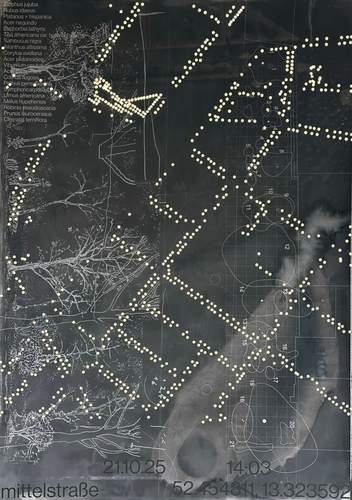
Inputs and workshops
There will be inputs and workshops with exciting guests. Juan Chacon from the international collective Zuloark will, as a guest lecturer, deliver his recurring impetus for creativity and productivity with ‘design something’. Further inputs and workshops are planned. As a further format for exchange, Discoursive Dinners on Wednesdays, in collaboration with the design studio Do What You Want, are currently being prepared as part of the project.
IBA – Context and Aspirations
The design project is supported by the Special Projects / IBA Department of the Senate Department for Urban Development, Construction and Housing.
A new international building exhibition in Berlin? The term IBA immediately raises high expectations. In Berlin, IBAs stand for fundamental shifts in urban development.
Interbau 1954/57 is still regarded today as an important pioneer for the modern city in post-war Germany.
In the Hansaviertel, a number of architects who are now world-renowned were commissioned to design buildings that promoted living amidst greenery – and thus a departure from the city of streets and blocks, the Berlin of tenement blocks and property speculation. The post-war city was to be open, well-organised, green and healthy. Owenership was public.
The International Building Exhibition 84/87 then marked a U-turn. The modern city had, in many respects, fallen into crisis. Both new-build developments on ‘greenfield sites’ such as in the Märkisches Viertel and large-scale clear-cut regeneration projects, such as those around Kottbusser Tor, with their standardised floor plans, forced resettlements and anonymity, came under criticism. Alexander Mitscherlich spoke, to great acclaim, of the inhospitability of cities. In the shadow of these major developments, spatial practices had emerged which, through self-organisation, a growing environmental awareness and new models of living and coexistence, revitalised and redesigned run-down old neighbourhoods.
The IBA 84/87 marked a return to the urban pattern of block, square and street, focusing on architecture at the scale of the vacant lot, the brownfield site and the individual building. It provided space for tenants’ initiatives that entered into an emancipatory negotiation process, redesigned their own living spaces, greened courtyards and thus helped shape the city both politically and in practice. Could the principles of ‘careful urban renewal’ (Hardt-Walther-Hämer) still help us today to shape fairer cities in a participatory manner?
Through our project work, we are contributing to the discussion on how the new IBA, planned for 2034/37 with a focus on social, economic and ecological aspects, can position itself within this context. Architecture’s capacity for action lies at the intersection of key questions for the future: How can the housing crisis be resolved? What contribution can architecture and urban development make to reducing CO2 emissions and adapting to climate change? How can cities become fairer, more mixed and more diverse? Through our project, we seek radical connections between these major questions and the small, concrete places within the city.
Dates:
First meeting: Tuesday 14 April, 14:30 – Room 401
Studio day is Tuesday 14:00–18:00
Modules: Bachelor’s, Module 13, Design IV and V; Master’s, Modules 1 and 4
Participants: approx. 18
Registration via Moodle!
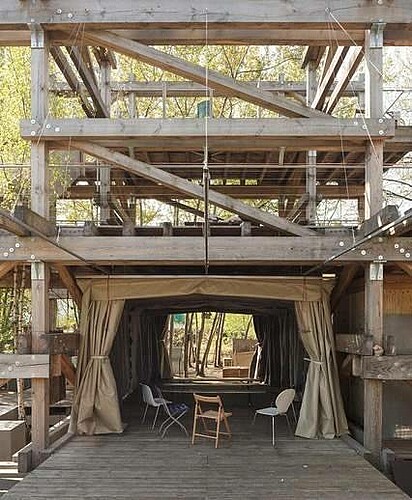
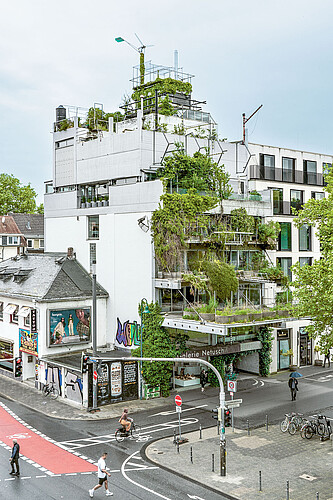
A microforest (also called a TinyForest) is a planted forest on a relatively small area with high density. The goal of such new plantings is to create diverse, fast-growing, and self-sustaining habitats in urban spaces on small plots of land, thereby achieving an improvement in the environmental situation. Source: Wikipedia