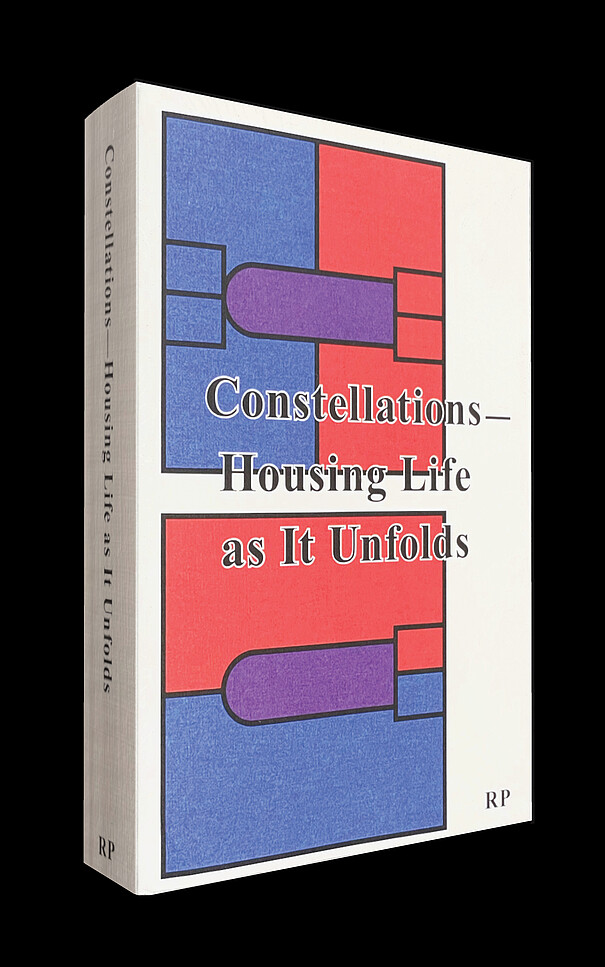
In the Winter semester 2026/27, Atelier Stattbau* continues to investigate and test strategies to address the acute housing crisis in Berlin and to provide more living space for everyone — under the premise of building as little as possible.
The high ecological footprint of building, alongside economic challenges (It’s expensive!), serves as a starting point to question building as the default response to housing shortages. The housing crisis is understood in the studio as a complex, “wicked problem” shaped by diverse, intertwined factors. The underlying thesis of the studio is that there is space, but it is poorly distributed and therefore unavailable as housing for those in need — ranging from unused rooms in large apartments to vacant office spaces.
Working with a selection of existing buildings and spaces, participants develop project ideas focusing on the conversion, continued use, upgrading, and densification of housing, and formulate these as concrete designs, taking into account legal frameworks, housing conventions, and the economic aspects of construction and maintenance. The goal is to develop independent approaches and implement them spatially through architectural design in order to develop realistic architectural solutions to the housing crisis.
An excursion to Genova, Italy, titled Genoa: Inclusive Urbanism, will be offered. Participation in the excursion is open only to members of the design studio, but is not mandatory.
Intended Audience MA Modul 01/04 and BA 3. Year Modul 13
First Meeting Wed. 14.10.26 10.00 a.m. Room 306
Application The project choice will take place digitally on Monday 12.10.26. Students can submit 3 project choices from 1pm to 4pm on Moodle.
Erasmus students without UdK mail address or Moodle access can apply via email to m.numberger_ @udk-berlin.de also by Monday 12.10.2026 4pm at the latest.
*Atelier Stattbau researches and tests creative practices to actively engage in spatial discourse and urban development beyond designing new buildings.