studio raumproduktion WiSe26/27: Do What You Want - Navigating Complexities
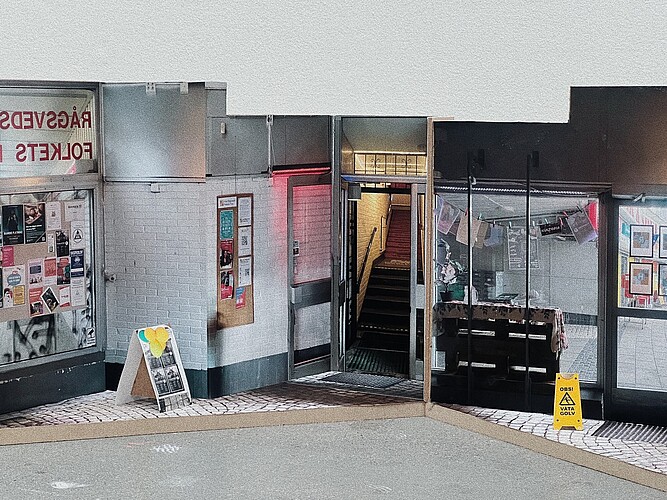
We believe in the simple power of coming together and in creating spaces where differences are recognised and embraced. These are spaces where we can disagree, but never forget that respect and care form the foundation of our interactions.
“The challenge lies in altering prevalent practices that rely on (bad) habits, (mere) opinions, and (prejudiced) clichés. It’s a question of how to circumvent the empty platitudes you use to soothe yourself in the face of radical contingency as you struggle within your local universe of values, especially when it turns out, after all, to be wildly unpredictable. To take a risk, but also to take care.” 1
For ten years now, Do What You Want has been a place where critical thinking meets spatial production. As we like to say: radically individual, yet rooted in collaboration. Together, we support your ideas throughout the entire semester whilst exploring various research methods. Do What You Want is a support structure for your research and your interests. It requires commitment and openness; it requires unlearning, stepping out of your comfort zone and supporting others in doing the same.
This semester, we’re looking at how to deal with complexities and how we can navigate situations that are multi-layered, contradictory, sometimes overwhelming and confusing. How can we take action and learn, through shared experiences, to navigate such situations? We will explore this space for thought together in a small series of breakfast reading rooms. This discourse can inform your work; jet you are free to choose your own interests and research questions, unbound by this specific theme. It all begins with formulating the question. For asking questions is, in itself, is an important task to learn. It involves taking a stance, building relationships and setting a framework. None of these decisions are ever neutral, they are always directional. Whilst a precisely defined question sharpens the focus on specific aspects, it simultaneously creates blind spots – areas that are overlooked or not taken into account. This semester, we want to practise an iterative approach to the design process, one that sequentially broadens, incorporates and focuses our perspective, edits, and makes design decisions.
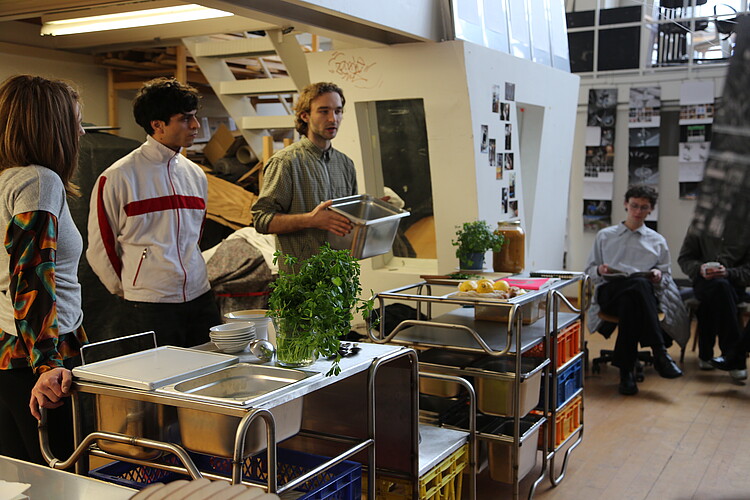
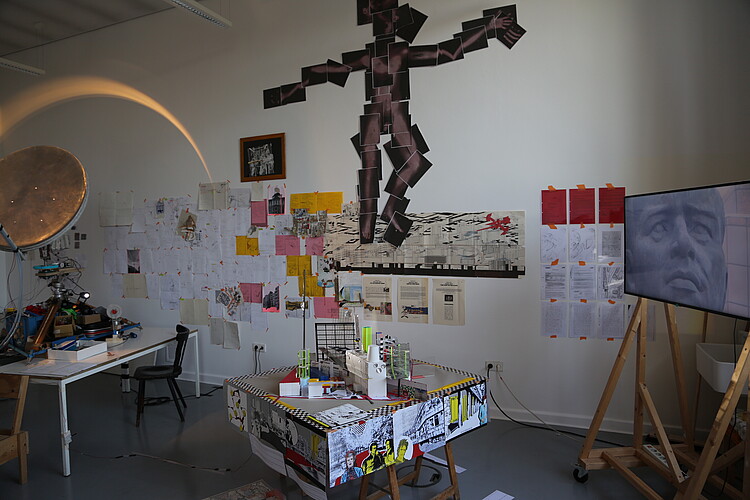
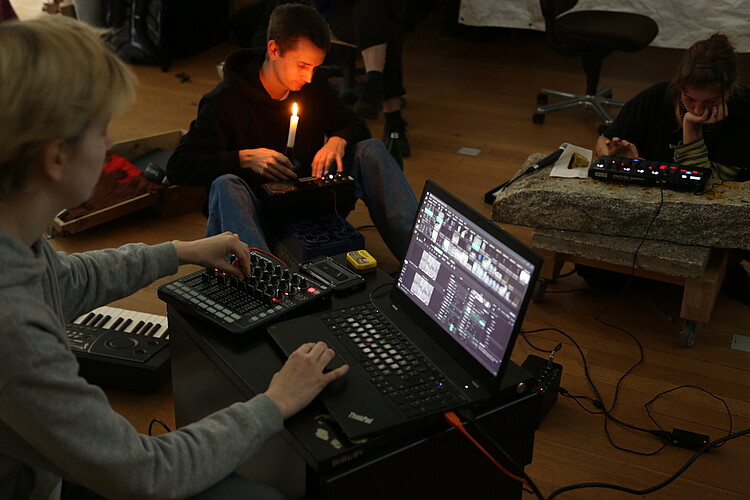
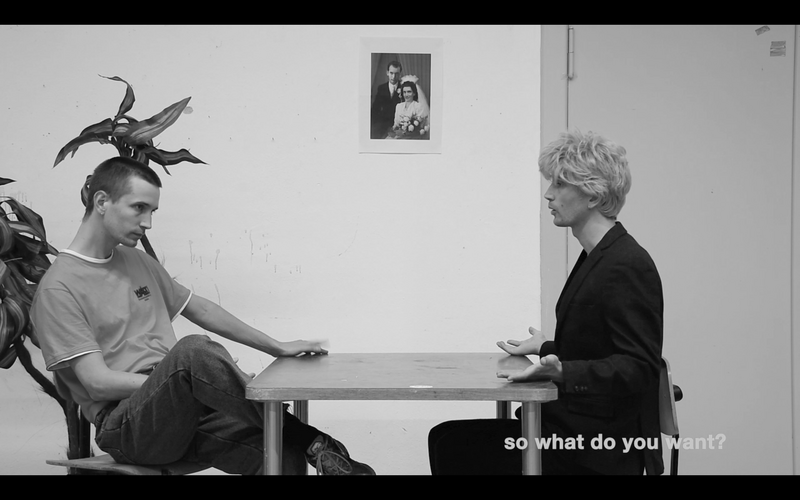

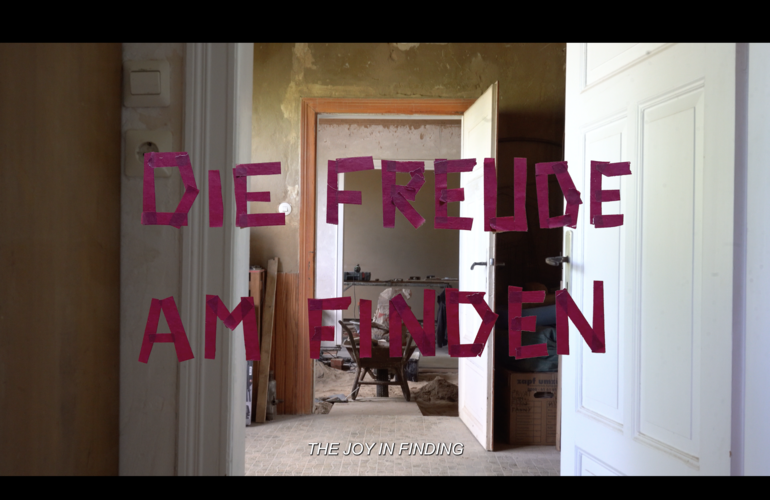
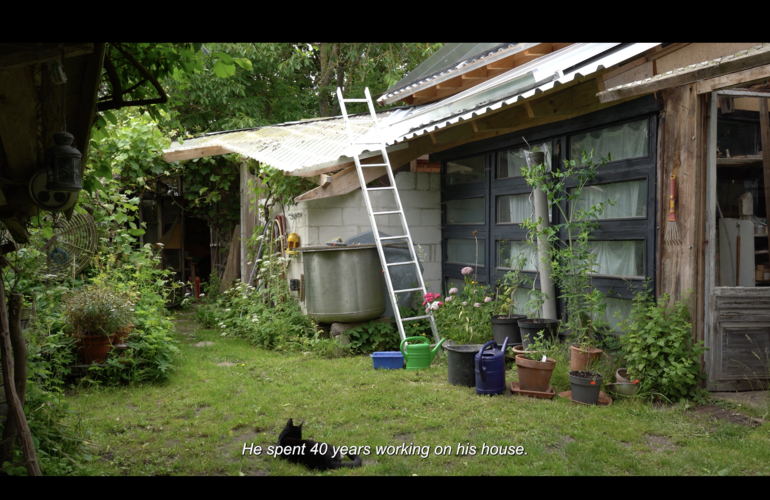
In our weekly group review sessions, we encourage you to ‘unlearn’ the concept of feedback. How can you resist the urge to express an opinion, and instead listen deeply and ask questions? As the performance artist Anna Ádám says in her School of Disobedience: “The work doesn’t need opinions. It needs time.” 2
We meet every Wednesday in Studio 401. Each week, we take time to discuss your individual work in colloquium-style discussions, short pin-ups and detailed presentations. Everyone takes part in the discussion.
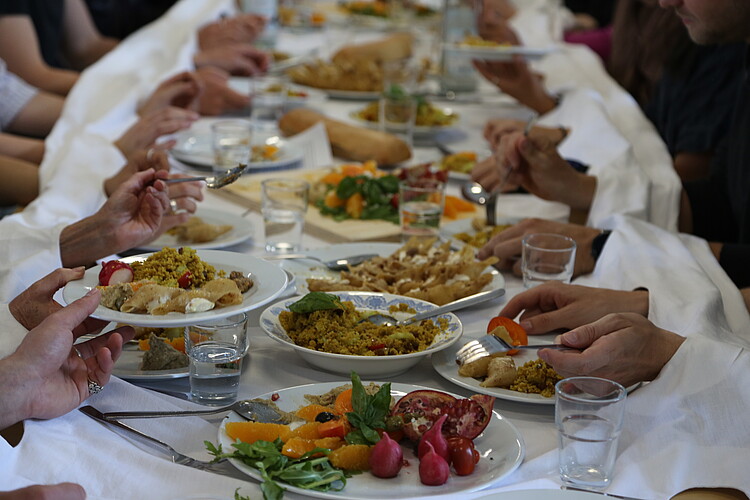
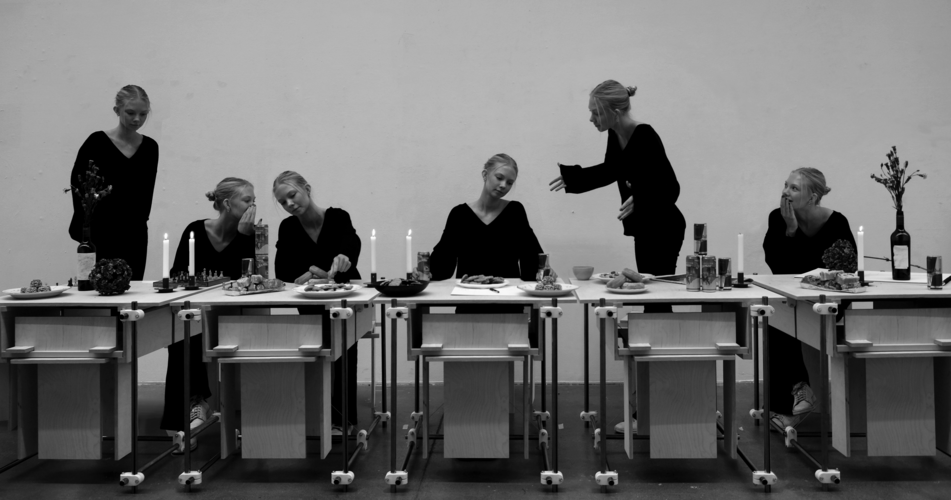
Discursive Dinners and other forms of hospitality are an integral part of our course. The joint efforts of three groups – the Space and Curation Group, the Documentation and Dissemination Group, and the Communications Group – help us to build relationships that go beyond individual design tasks and even beyond the studio.
In her essay ‘A PLACE BETWEEN, Art, Architecture and Critical Theory’, Jane Rendell quotes the group ‘Platform’: ‘Imagination is the root of all change’. Silvia Gioberti’s computer is adorned with the words ‘nothing works by itself’. We read these two statements together as an invitation to do things differently. Change requires both: an imaginary of what could be changed and how it could be different, and the practice and rehearsal of taking action.
Participation is limited to 12 students.
We meet every Wednesday from 10.00 to 18.00 in Studio 401 (any changes due to committee work will be communicated).
The first meeting, to briefly discuss your project proposals for the semester, will take place on Wednesday 14 October at 16.00 in Studio 401.
Modules: primarily Master’s, MA Module 01 / 04 + BA Module 13
We have already received emails from students expressing an interest in “Do What You Want”. Please make sure to register on Moodle anyway!


__________________
1 How to make yourself a Feminist Design Power Tool, Hélène Frichot, AADR, 2016
2 The ‘School of Disobedience’ by performance artist and Budapest-based educator Anna Ádám on the hidden dangers of feedback: ‘Feedback can normalise. It brings the work closer to what is already known, already legible, already acceptable. Towards coherence. Towards something that fits. But what if the work refuses to fit? What if its strength lies precisely in its contradictions, in its opacity, in its refusal to dissolve? Feedback tends to smooth out the rough edges. And sometimes those rough edges are the work itself.”
3 A PLACE BETWEEN, Art, Architecture and Critical Theory, Jane Rendell