COATings - SoSe26
Pola Koch
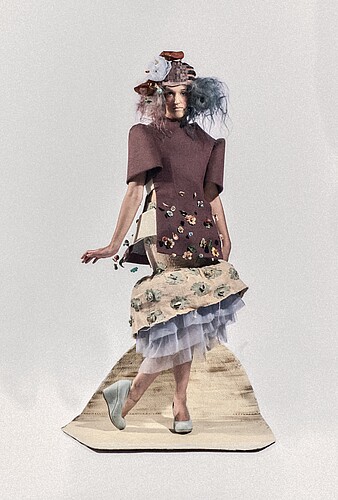
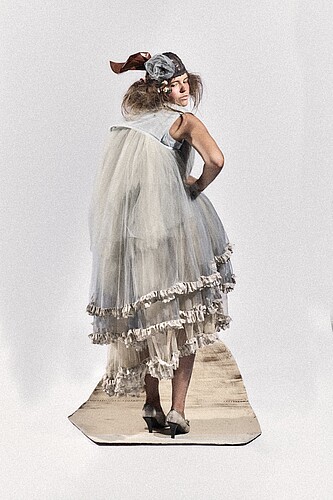
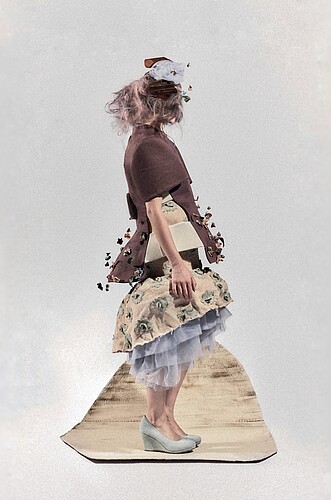
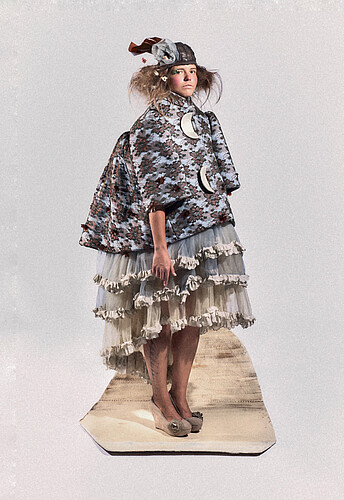
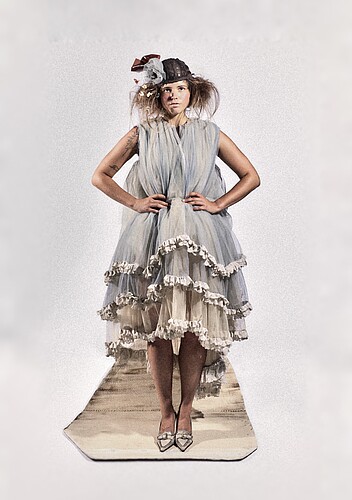
Imaginäres Theater
‘’I simply wanted to play and so I tried to be able to play all my life AND SO I PLAY” ~Trnka
Milan Aradei-Odenkirchen
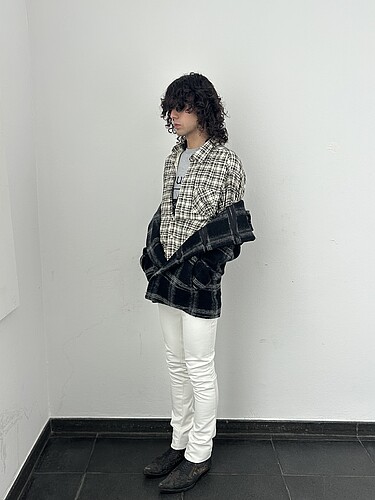
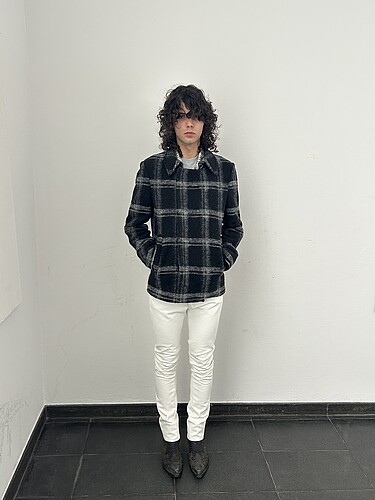
Credits
Design: Leif Kessler @leifisstrange;
Photography: Tobias Kruse @tobias kruse
Talents: Katya Makhno @kalera3000 via
@vivamodelsberlin
; Anastasia @___n.as via
@vivamodelsberlin
; Hair: Tona Inoue @tona inoue
; Make-up: Anri mori @anri omori
; Digital operator: Eric Terrey @terreyeric
; Light operator :Marshl Ceron @marshl_ceron
; Special thanks: Dominik Bittman @dombitt
Ida Aduke Freydag

Beauty standarts are deeply rooted in globalised Western culture. Escaping them doesnt mean
creating more variations and cathegories of beauty within the system. Its about stepping outside
of the system and try to think in ways we cant even imagine yet… seeing beauty within a process
Credits
Foto Credits (bei allen Bildern)
Model: Dianna (@jacksan_manzamussa)
Maker: Ida Aduke Freydag (@ida.aduke)
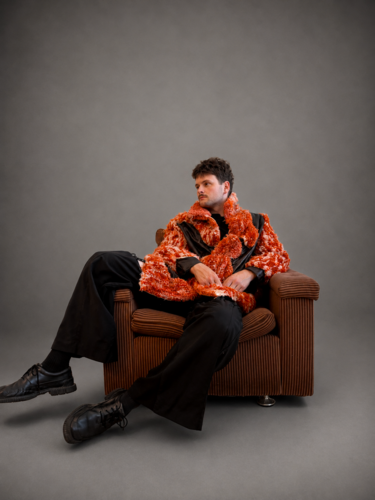
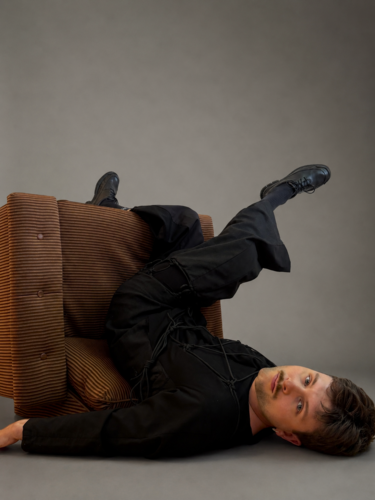
What if waste could become our second skin? RE:COATING explores the transformation of discarded materials into new forms of protection, function and identity. Starting from the banana peel — the natural coating of a fruit — discarded peels are transformed into a self-developed biomaterial and used as a leather alternative for the coat. What once protected a fruit becomes a protective layer for the human body. Inspired by the Afghan coats of the hippie movement, the coat combines the banana-based biomaterial with tufted secondhand wool that grows organically across its surface like a living second skin. In contrast, the accompanying overall translates the technical language of running gear and Gorpcore into recycled materials. Tailored wool trousers, Paracord constructions and functional detailing merge outdoor aesthetics with traditional craft. Positioned between nature and technology, craft and performance, past and future, RE:COATING questions when waste stops being waste — and how design can give existing materials a new identity. From peel to skin. From waste to material. From material to identity.
Credits
Artist and Maker: Luna-Marie Grande Matos, @lunama.gm, @lumo.sstudio Pattern and Concept Luna-Marie Grande Matos Model: Rupert Horn Photos and Editing: Luna-Marie Grande Matos
Hyebin Jo
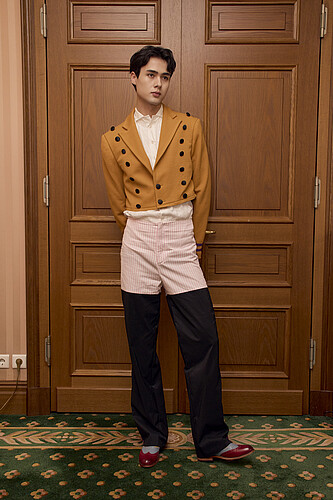
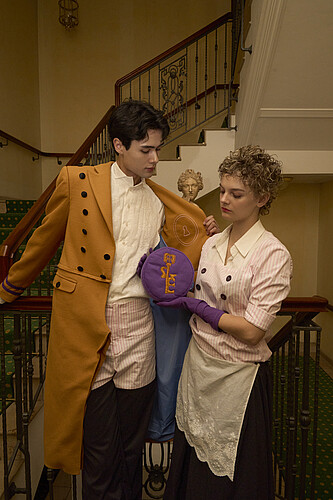
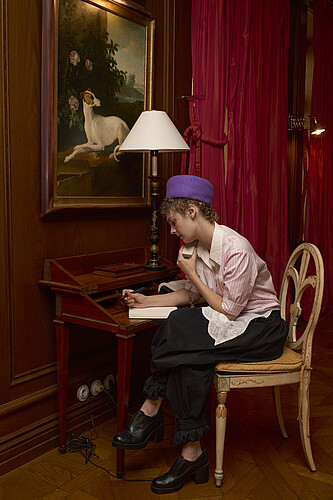
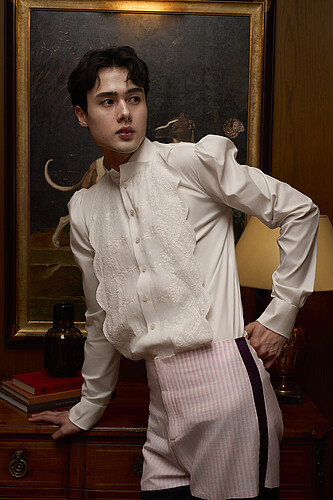
Uniforms speak a different language from fashion. They represent professionalism and belonging, while fashion embodies individuality and personal expression. We move along the boundary between these two worlds. By deconstructing, reassembling, and transforming forms, the individual becomes visible within the collective.
Credits
Creative director & Designer : Hyebin Jo / Instagram : @hye.jodd
Photographer & Cinematographer : Donghyun Seo @studio_knips
Film Editor : Hyebin Jo @hye.jodd
Make-up Artist : Sunmi Heo
Models : Lorenz Ni @lorenz.ni, Mara eileen Grimm @maraxyleen
Content Shoo<paragraph></paragraph>t Collaboration with Hotel Louisa’s Place Berlin
Estere Karklina
Charlotte Kinter
Iman Kletke
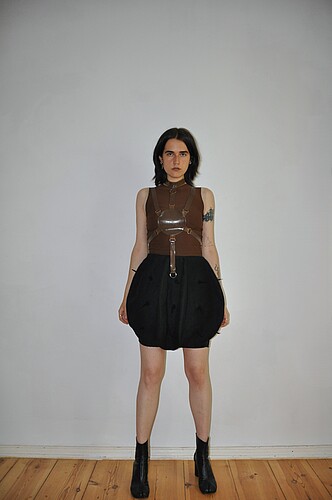
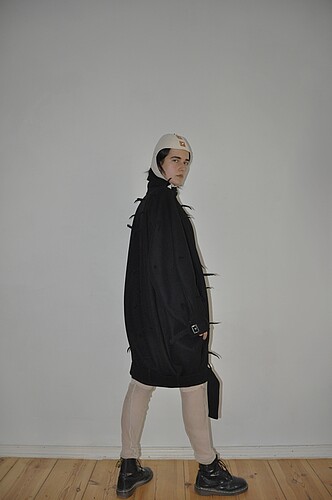
Exokarp
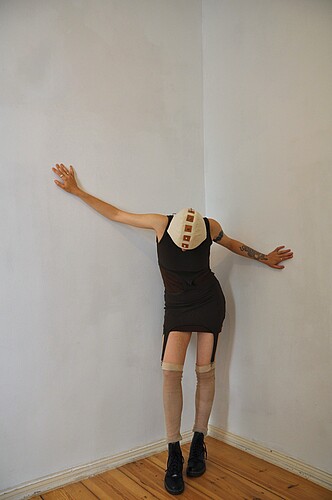
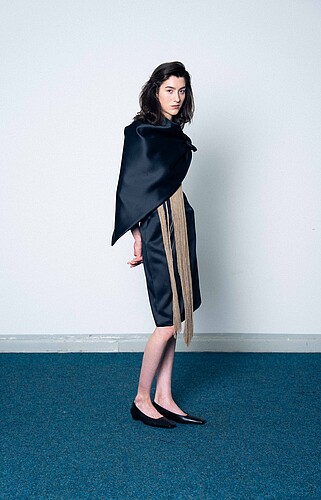
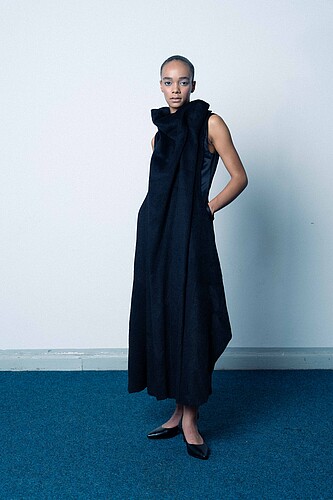
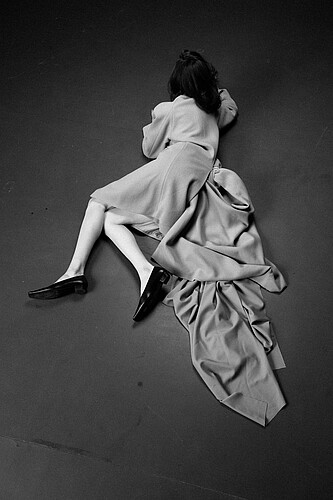
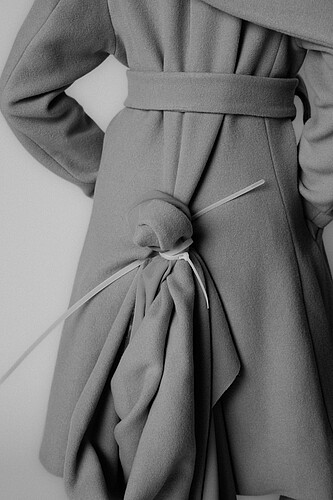
Der Mantel als äußerste Kleidungsschicht wird im Sinne einer verbergenden Umhüllung des Körpers und isolierenden Ummantelung eines inneren Kerns verstanden. So fand der Entwurf seinen Ausgangspunkt in der Erinnerung an die kindliche Faszination für Kastanien, deren stachelige Schale zu einer tragbaren Schutzhülle wird.
Der davon abgeleitete Mantel hat eine gerundete Silhouette, die Raum schafft und einnimmt, sowie eine offene, konkave Vorderkante, die das Aufplatzen einer Schale nachempfindet.
Die Schnittkonstruktion basiert auf dem funktionalen Trenchcoat, der als schützende Barriere zwischen vulnerablem Körper und äußeren Widrigkeiten und Bedrohungen dient. Wolle als wärmendes und robustes Material unterstreicht dies und verweist zugleich auf historische Feldmäntel. Pflanzliche Stacheln der Kastanienschale werden durch nadelgefilzte Wolle (Haare) in eine organisch-textile Oberfläche übersetzt; Dabei entsteht eine Verbindung zu Liberty Spikes, einer auf keltische Krieger zurückgehenden Frisur, die später von der Punkbewegung aufgegriffen wurde.
Der zweite Look ist ein Brust-Harness aus selbst gefärbtem, gegossenem und geklebtem braunen Latex, dessen Materialität Kastanienhaut nachahmt, sowie ein kugelförmiger Rock mit gefilzten Stacheln.
Der Entwurf ist eine Anerkennung von Kindheitsempfindungen und jugendlichem (subkulturellem) Selbstausdruck; Er verbindet Geborgenheit und Schutz mit Bekräftigung und Abgrenzung.
Yalda Mirzalou
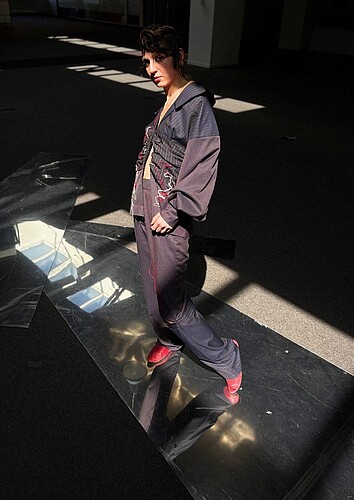
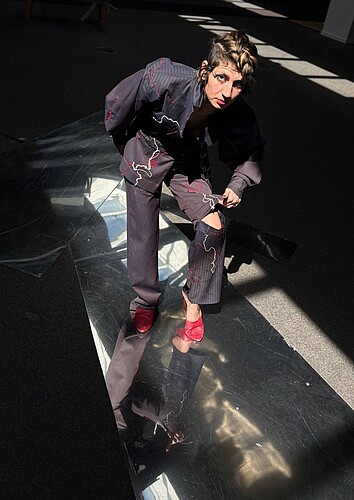
Leyla Papoulia
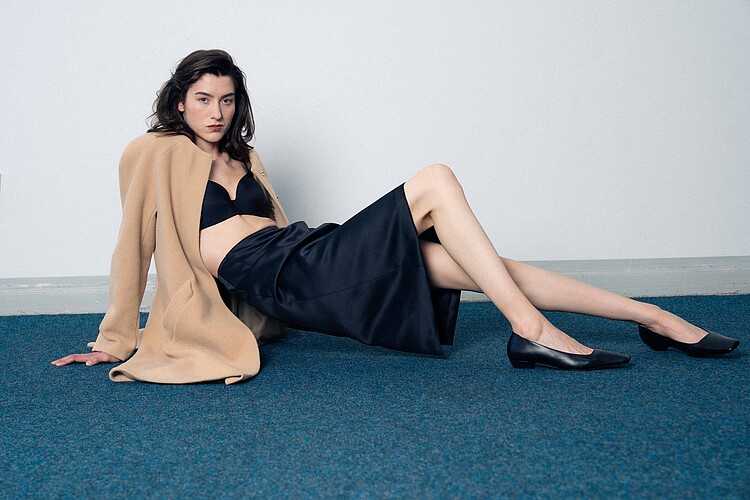
Credits
Photography Jonatahn Kämmerer @ionathangeorge
Model 1 Juliane @ju.laee
Model 2 Ronja @ronja.jolanda
Bob Poensgen
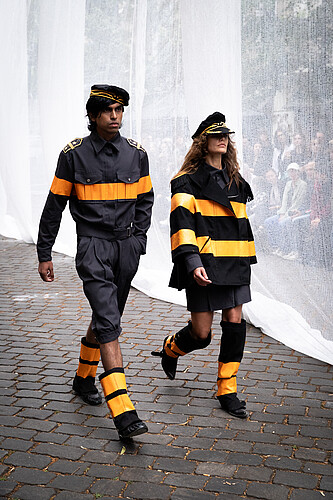
“Drecksarbeit”
Based on the principles of semantics,
Drecksarbeit
explores the way clothing coats ideas and
ideologies.
The clothing worn by a class, job or group
of people does
not truly reflect their principles and values.
The
aesthetization of behaviour and values
gets abused to
present an untruthful image. This image
however,
constitutes rank in society.
Using the aesthetic practices of military
ceremonial wear,
Drecksarbeit gives this power to the
sanitation Workers.
People that keep our society clean, whom
without we
wouldn't survive, are worthy of
recognition.
Mara Walther
**SOSE:
**
TEXT:
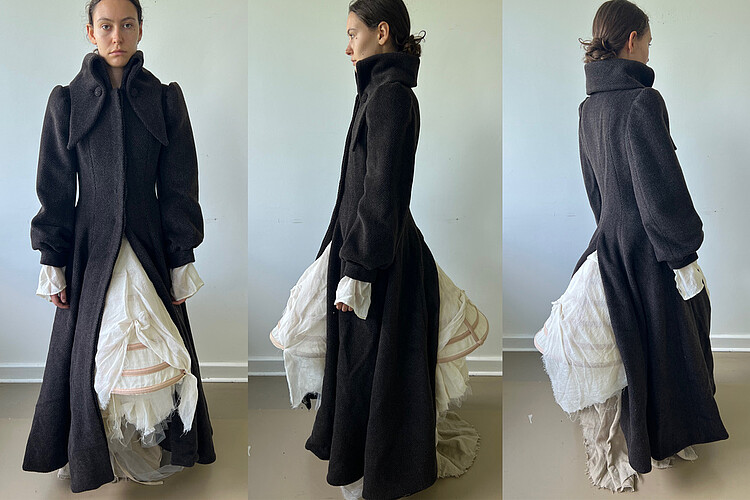
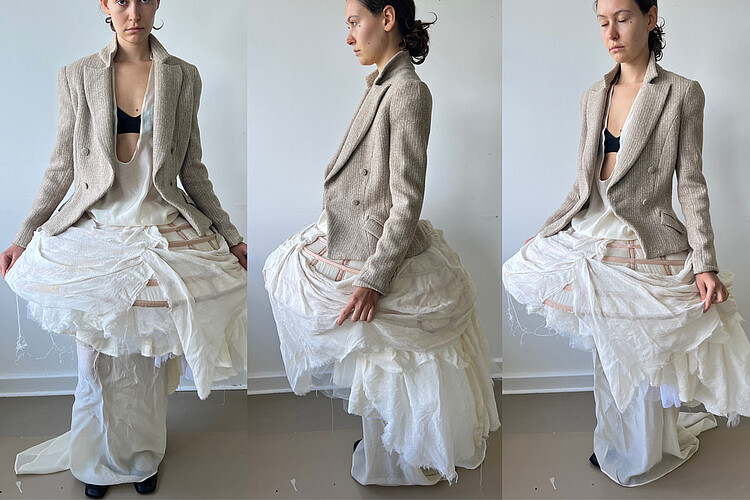
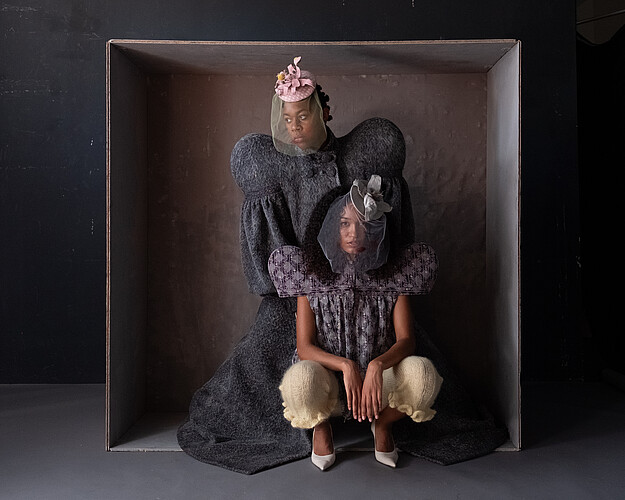
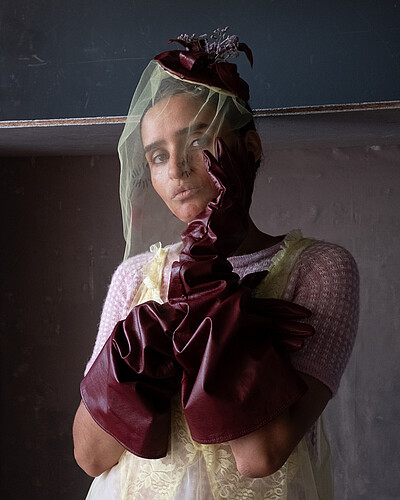
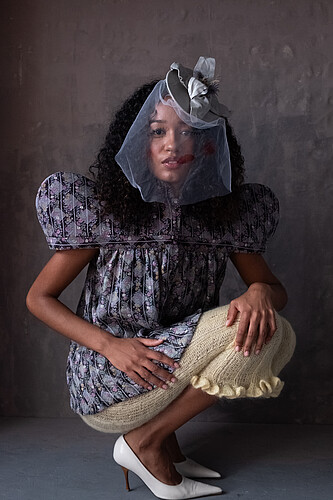
Mit meinem Projekt „Dressing Up“ suche ich die Inspiration in meiner eigenen Kindheit und vor allem in alten Fotografien von mir, meiner Schwester und meinen Cousinen, wo wir verkleidet sind.
Mich fasziniert der Moment, in dem Kinder durch Kleidung in fremde Rollen schlüpfen und sich selbst neu erfinden. Den Anstoß für die Arbeit gab mein eigenes Ich vor zwanzig Jahren: Damals habe ich mich fast täglich in den Kleidern meiner Mutter neu erfunden. Auch eine bestimmte Szene aus Pippi Langstrumpf, in der sie sich als Frau Prysselius verkleidet, war ein wichtiger Einfluss für mich.
Das Semesterthema „Coatings“ habe ich in diesem Projekt ganz direkt auf das Verkleiden übertragen: Das Einhüllen als Möglichkeit, in eine andere Identität zu schlüpfen. Meine Silhouetten erzählen von der kindlichen Sehnsucht, endlich erwachsen zu sein. Ich wollte genau das Bild einfangen, das entsteht, wenn kleine Körper in den viel zu großen Kleidern ihrer Eltern verschwinden.
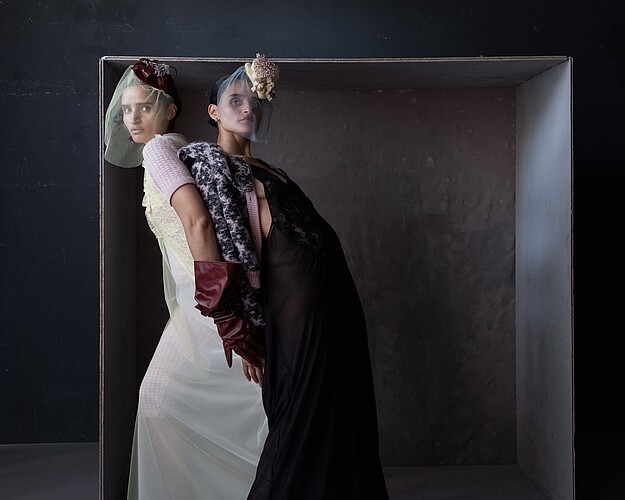
Deshalb kombiniere ich stark überzeichnete Elemente – wie extrem überschnittene Schultern, XXL-Handschuhe und ein riesiges Negligé – mit passgenauen Kleidungsstücken, die an Kindergrößen erinnern.
So entsteht in den Proportionen und Mustern ein spannender Kontrast aus Übergröße, dem Nachahmen der Erwachsenenwelt und kindlicher Verspieltheit. Die bemalten Schleier mit Makeup greifen diesen Gedanken ebenfalls auf: Sie stehen für die ersten, noch ungelenken Versuche, sich mit Make-up älter zu machen.
Letztendlich ist „Dressing Up“ meine ganz persönliche Hommage an die kindliche Fantasie beim Verkleiden. Es geht um genau diesen Zwischenraum – das spielerische Verstecken des kindlichen Ichs und das mutige Anprobieren des Erwachsenseins.
TEXT ENGLISH:
With my project "Dressing Up," I am embarking on a journey into my own childhood memories, inspired by old photographs and the carefree dress-up games of that time.
I’ve always been fascinated by the moment children slip into foreign roles through clothing to reinvent themselves. The spark for this work came from my own six-year-old self twenty years ago, constantly creating new identities using my mother’s clothes.
Another key inspiration was a specific scene featuring Pippi Longstocking—my absolute childhood icon—where she dresses up as Miss Prysselius.
I directly translated the semester theme, "Coatings," into the act of dressing up, interpreting the layers we wear as a way to transform into a new identity. My silhouettes capture the childlike longing to finally grow up and the unique visuals created when small bodies disappear into their parents’ oversized clothes.
To bring this contrast to life, I combined heavily exaggerated adult elements—such as extreme drop shoulders, XXL gloves, and a giant negligee—with fitted pieces tailored to child proportions. This creates a compelling tension between exaggeration, the imitation of the adult world, and playful childhood energy, further enhanced through the patterns. The hand-painted veils featuring makeup motifs build on this concept, echoing those early, awkward attempts at applying makeup to appear older.
Ultimately, "Dressing Up" is my personal homage to the imaginative power of childhood dress-up. It lives in that space between hiding your younger self and bravely trying on adulthood for size.